Tag: Importers

  • VIN crisis: Importers threaten to shutdown Lagos markets

    VIN crisis: Importers threaten to shutdown Lagos markets

    Importers under the aegis of Ndigboamaka Progressive (Market) Association have threatened to shutdown Lagos markets within two days over the implementation of the Vehicle Identification Number (VIN) Valuation policy.

    Dr Jude Okeke, president, Ndigboamaka issued the warning at a media conference in Lagos on Wednesday.

    He said the group took the position because the implementation of VIN valuation policy introduced by the Nigeria Customs Service (NCS) had profound effects on markets, trade and economy.

    He noted that importers who were faced with many issues ranging from terminal and shipping line charges now had to bear the additional burden of the VIN valuation policy.

    He said the extra costs associated with these policies negatively affected the businesses of his members, as they made goods expensive for consumers, the end users.

    According to him, the threat to shutdown the markets is not to hurt any individual or government agencies, but to ensure things are done the right way.

    “We are major importers of various commodities and trading under the name Ndigboamaka Progressive Association, an umbrella body of major market associations in Lagos.

    “Examples of such markets are Alaba International Market, All Markets in Trade Fair Complex, Ladipo Market, Coker building Materials and others.

    “This meeting is to show our distress on what government does as regards policies put out and their negative impact on our businesses.

    “We are saying enough is enough and to make our voice heard, we will be collaborating with the Shippers Association Lagos State (SALS), to discuss how some of our vexatious government policies can be amicably resolved,” he said.

    Okeke said it was unfortunate that policies were introduced without carrying stakeholders along.

    He stated that after deliberation with members, the association decided that the VIN policy should be suspended indefinitely because it was introduced without the knowledge of importers.

    “Members work with bank loans and this is not conducive, and so we will be working with SALS to manage a fund set up by government to cushion our financial pressure in the foreseeable future.

    “The fund will be managed by key players in the maritime sector. No government agencies will interfere with it,” he said.

    Rev. Jonathan Nicole, president, SALS, noted that the alliance with Ndigboamaka was to create an enabling environment for importers to be self sufficient and assist government in revenue generation.

    “SALS have been fighting the battle for importers for the past eight years especially on cost, shipping and terminal charges and all of these problems will be resolved.

    “This new one on VIN should be suspended indefinitely so that goods and vehicles stranded at port will be removed.

    “This morning, I just received information concerning this VIN issue, the Port and Terminal Multiservices Ltd. saying that over 12,000 vehicles are trapped in their terminal and attracting demurrage and shipping line charges.

    “By the time we quantify the amount importers will be loosing, the demurrage is going over N600 million naira. We cannot continue to accommodate such expenses anymore, so they need to discard the policy,” he said.

    Nicole said the insinuation that second hand vehicles were a nuisance was wrong because when imported they are taken to authorised workshops to be certified and issued road worthiness license.

    “This meeting is to tell the Nigerian government that we are not happy and this alliance will continue until government changes their policies and listens to us,” he said.

  • NAFDAC implores importers, distributors to discontinue sales, use of Lefin Pediatric Suspension drug

    NAFDAC implores importers, distributors to discontinue sales, use of Lefin Pediatric Suspension drug

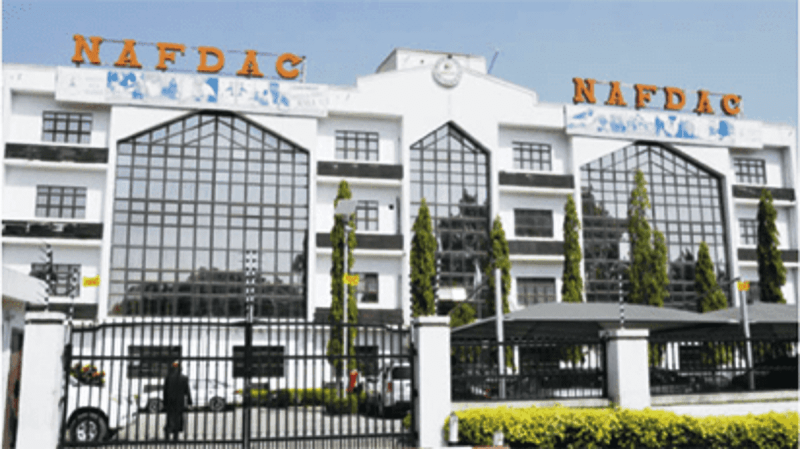
    The National Agency for Food and Drug Administration and Control (NAFDAC), has warned importers, distributors, and consumers to discontinue the sale and use of Lefin Pediatric Suspension drug with immediate effect.
    The agency, on Sunday in a public alert with No. 0047/2021, also asked consumers to hand over the remaining stock of the drug to the nearest NAFDAC office.
    According to the alert, NAFDAC has been informed by Drug Regulatory Authority of Pakistan (DRAP) about a recent recall of Lefin Pediatric Suspension manufactured by M/S Leama Chemi Pharma (PVT) Limited for being substandard.
    The alert disclosed that Lefin Pediatric suspension is a brand of Paracetamol used for the relief of mild to moderate pain such as headache, muscle aches, toothache as well as pain caused by cold, flu, and sprains.
    “NAFDAC implores importers, distributors, and consumers in possession of the recalled lots of Lefin Pediatric Suspension to discontinue sale or use and hand over the remaining stock to the nearest NAFDAC office.

    “Health professionals and patients are encouraged to report adverse events or quality problems experienced with the use of these medicines to the nearest NAFDAC office.

    “The public could also make use of NAFDAC PRASCOR [20543 or 0800-1-NAFDAC (0800-1-623322) or its TOLL-FREE from all networks] or via pharmacovigilance@nafdac.gov.ng.
    “The public is also required to make use of the e-Reporting platform available on the NAFDAC website www.nafdac.gov.ng or via Med Safety application available for download on Android and IOS stores.
  • CBN begins e-invoice for importers, exporters Feb. 1

    CBN begins e-invoice for importers, exporters Feb. 1

    The Central Bank of Nigeria (CBN) says it will begin e-invoices for imports and exports in the country from Feb. 1, 2022.

    The apex bank made the disclosure in a circular to all authorised dealers and the general public, and signed by its Director, Trade and Exchange Department, Dr. O. S. Nnaji, and posted on its official website on Friday.

    It explained that all import and export operations would require the submission of an electronic invoice authenticated by the authorised dealer banks on the Nigeria single-window portal – Trade Monitoring System.

    The circular is titled ‘Guidelines on the introduction of e-valuation, e-invoicing for import and export in Nigeria”.

    It informed dealers and the general public that the introduction of e-valuator and e-invoice replaced hard copy final invoice as part of the documentation required for all import and export transactions.

    “This new regulation is primarily aimed at achieving accurate value from import and export items in and out of Nigeria,” it said.

    The apex bank said the e-invoicing guidelines required that products that were more than 2.5 per cent around the vertical price would be queried and would not be allowed successful completion of Form M or Form NXP as the case may be.

    According to the circular, an importer/exporter of goods into Nigeria must ensure that the purchase/sale contract with a foreign supplier/buyer stipulates compliance with the obligations set out in this regulation.

    It said that the supplier’s/seller’s invoice must be submitted in electronic format and authenticated by authorised dealer bank as part of the documentation for payment.

    “No importer/exporter may effect payment to the credit of any foreign supplier unless the electronic invoice has been authenticated by authorised dealer banks presented together with the relevant document for payments”.

  • NAFDAC cautions clearing agents, importers

    NAFDAC cautions clearing agents, importers

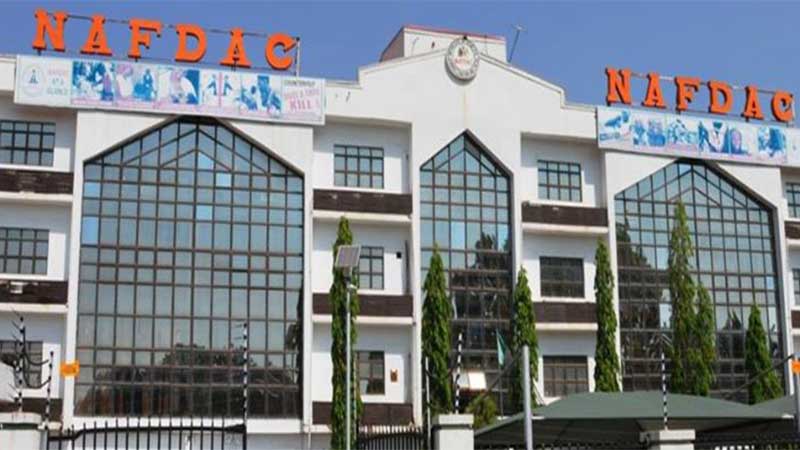
    The National Agency for Food and Drug Administration and Control (NAFDAC) has cautioned clearing agents and importers against illegal activities, saying sanctions await culprits of any shady deals.

    The caution is in a statement signed by NAFDAC’s Resident Media Consultant, Mr Olusayo Akintola in Abuja on Sunday.

    Akintola stated that the warning was given by the agency’s Director General, Prof. Mojisola Adeyeye, during a recent virtual stakeholders meeting.

    He quoted Adeyeye as saying “NAFDAC will not tolerate any unprofessional act from its stakeholders; the disturbing development where agents, with the connivance of importers, engage in falsification of documents will not be tolerated nor treated with kid gloves any longer.

    “We shall take all legal means as an agency set up by the Law of Nigeria to prosecute any erring stakeholders, importers.”

    The NAFDAC boss, who advised importers to desist from entrusting the entire process of clearance their consignments to agents, said “you

    are urged to initiate the clearance of your goods.

    “I am happy to state that from wherever in the world, you can process the clearance of your products with NAFDAC without visiting any formation of NAFDAC or port offices.”

    She also advised importers and clearing agents to ensure that they completed every clearing transaction with NAFDAC “up to the point of generation of NAFDAC electronic Release Notices.”

    She reiterated commitment to modernise NAFDACs processes and institutionalisation of international best practices in the way activities were conducted in the agency.

    She added that NAFDAC had deployed various processes to ensure auto verification of documents presented to the agency during clearance.

    She said “the agency had placed in the hands of stakeholders, the ability to verify the true status of clearance of regulated products and ensure that it rewarded clients with low risk profile.

    “I wish to appeal that you comply with the fast-changing updates currently ongoing in NAFDAC, these include the current issuance of electronic NAFDAC Invoices, NAFDAC Receipts, First Endorsement Notices and Release Notices.

    “We are conscientiously working toward assisting stakeholders to achieve regulatory compliance by ensuring that these requirements are made transparent and accessible to stakeholders through the availability of regulations, guidelines, tariff, and process requirements on the NAFDAC website.

    “I have also ensured that we maintain transparency and continue the implementation of the Quality Management Systems in our ports processes, this has led to a review and update of existing Standards Operating Procedures (SOP).

    “We also maintain the implementation of strategic QMS activities for ISO 9001-2015 certification, and entrenchment of World Health Organisation (WHO) global benchmarking (ISO 9004) across all the Airports, Seaports, and land borders.”

  • Rice production: Exporters/importers will fight back By Ehichioya Ezomon

    Rice production: Exporters/importers will fight back By Ehichioya Ezomon

    By Ehichioya Ezomon

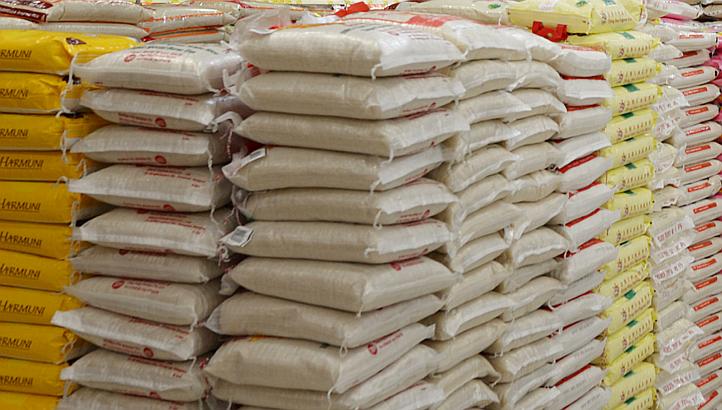
    The other day, I set out with my “Skelewu” dance steps when rice farmers and millers gave the assurances that, due to expected bumper harvest, and their desire to assist in the reduction of prices of goods, a 50kg of rice would crash to N6,000 in a few months.

    My happiness was twofold. One, that rice, whose price hit the rooftop at N25,000 before bottoming out between N13,000 and N15,000 lately, would soon be within reach of the average Nigerian. And two, that the Federal Government preachment, and its commitment to increasing food production, was yielding unexpected quick dividend.

    In my ecstasy, I took a journey back into time, to the Second Republic, from 1979 to 1983, when the civilian administration of President Shehu Shagari, elected on the platform of the National Party of Nigeria (NPN), promised Nigerians a “Green Revolution” in agricultural production.

    A major plank of the pledged turn-around was to increase the production of rice in order to reduce the country’s dependence on importation of the product that’s a staple of most homes in the country. To this end, the government acquired hectares of land all over the federation, and bulldozed and prepared them for cultivation only to virtually abandon the agricultural revolution ab initio.

    For all practical purposes, the government did the bush-clearing for three consecutive years, but seeded only an insignificant portion of the vast, arable land. So, each year, the cleared, vacant plots would return to grasslands and then bushes.

    Instead of the expected bountiful local production, the government, under the supervision of the powerful Minister of Transportation, the late Alhaji Umaru Dikko (1936-2014), resorted to massive importation of products, culminating in the infamous “Rice Armanda,” “Sugar Armanda,” and “Fertilizer Armanda,” to name a few.

    Meaning that the “revolution” was very “green” in one particular sector: the pockets of politicians of the ruling NPN, whose slogan of “One Nation, One Destiny” was perhaps only in their striving to corner the people’s patrimony.

    Now, leapfrog to 2017, and we are witnessing, without a code name, an actual “revolution” in agriculture. With a presidential initiative backed by appropriate policies, funding, implements, incentives and encouragement, agriculture has suddenly left the backstage to assume the second position to oil in the economy.

    As acknowledged by President Muhammadu Buhari in his October 1 Independence Day broadcast, the Governors of Lagos, Kebbi, Ebonyi and Jigawa are leading in “rice and fertilizer revolutions,” while the Governors of Ondo, Edo, Delta, Imo, Cross River, Benue, Ogun, Kaduna and Plateau States are contributing their quotas in palm oil, rubber, cashew, cassava, potatoes and other crops.

    Increased rice production has prompted the government to reduce importation that had affected local efforts in the past. An October 9 report by the New Telegraph indicated that, “Nigeria has cut rice importation by 2.77 million metric tons valued at N420 billion ($1.17 billion) since the beginning of the year (2017),” as local production reached 56.6 per cent of the total domestic consumption of 4.9 million tons valued at N742.6 billion ($2.06 billion), adding that, “this has affected Thailand’s rice adversely, as unsold stocks are piling up daily.”

    Consequently, Thailand, which has been feeding fat on Nigerians’ craving for foreign rice, is lamenting the cutback on imports, and the resultant unsold stocks. According to the president of Thailand Rice Exporters Association (TREA), Mr. Chookiat Ophaswongse, “If the situation continues like this, you will see a lot of exporters going out of business.”

    Imagine Thailand, which, for decades, flooded Nigeria with years-old chemically-stored rice! Whom did our local rice farmers and millers cry to when, according to the Central Bank of Nigeria (CBN) report in 2016, the amount Nigeria spent between January 2012 and May 2015 on rice importation “resulted in huge unsold stock of paddy rice cultivated by Nigerian farmers and low operating capacities of many integrated rice mills?”

    Sadly, Thailand and some other rice exporters are co-opting Nigerian importers to cajole, pressurize and outrightly blackmail the government to revisit or reverse its decision to cut down on rice imports to Nigeria. Their strategy is to engage in mis/false information or dish out figures that would rebut government’s numbers on its agricultural output.

    How else do we categorize figures given by the United States Department of Agriculture (USDA), contradicting the ones issued by the Minister of Agriculture and Rural Development, Chief Audu Ogbeh, on Nigeria’s rice production and importation?

    Ironically, the United States of America, whose President’s mantra is “AMERICA FIRST,” is bandying figures to counter those of Nigeria’s Minister of Agriculture, who, without sloganeering, also wants “NIGERIA FIRST” to guarantee for Nigerians employment, income and self-sufficiency in rice production.

    Well, rather than quarrel over figures, I’m euphoric that we, as a people, are about to discard the unenviable record of the world’s highest rice importer, and a dumping ground for Thailand, the United States and Vietnam. If you ask me, these rice exporters should fret “bigly” (big league), “as Nigeria cuts imports by 2m tons.”

    Really, in these recession-induced times, who cares much about “accurate figures” so long as Nigeria has begun to produce enough rice for local consumption and channel prior billions spent on rice imports to needy products we have no comparative advantages in.

    I dare say that government’s initiative is a role reversal of some sorts. We have long borne the brunt of massive importation of rice. Now that we can maximize production of the commodity, let the other side feel the pinch of the shoe!


    * Mr. Ezomon, Journalist and Media Consultant, writes from Lagos, Nigeria.