Tag: journalists

  • Avoid glorifying terrorists, criminals- Information Minister urges media

    Avoid glorifying terrorists, criminals- Information Minister urges media

    Minister of Information and National Orientation, Mohammed Idris, has called on media professionals across the country to refrain from giving undue publicity to terrorists, bandits, and other criminal groups undermining Nigeria’s security.

    Speaking during the seventh edition of the 2025 Ministerial Press Briefing Series held at the National Press Centre in Abuja, the Minister emphasized the media’s powerful role in shaping national discourse and bolstering public morale, especially in the fight against insecurity.

    “The media are gatekeepers and vital partners in building our nation,” Idris said. “By focusing on the courage and achievements of our armed forces, rather than amplifying the actions of criminals, the media can help deny these groups the attention they desperately seek.”

    He warned that terrorist organizations often exploit traditional and social media platforms to spread fear, misinformation, and extremist propaganda aimed at recruiting followers and destabilizing communities.

    “These are not freedom fighters — they are kidnappers, killers, and enemies of peace. They must be portrayed as such,” the Minister stressed, urging journalists to avoid sensational headlines and to report responsibly, with national interest in mind.

    Idris also highlighted the Federal Government’s ongoing efforts to enhance security through President Bola Tinubu’s Renewed Hope Agenda, noting that significant investments are being made in modern military equipment, intelligence gathering, and strategic collaborations.

    He described the Ministerial Press Briefing Series, an initiative of his ministry, as a platform for transparency, public engagement, and government accountability. “This series gives Nigerians direct insight into our progress and plans. It’s broadcast live nationwide and streamed on digital platforms to ensure maximum reach.”

    The Minister commended the media for their active role in promoting public awareness and for their support of the briefing series. During the event, the Ministers of Defence, Alhaji Mohammed Badaru Abubakar, and Environment, Alhaji Balarabe Abbas, also shared updates on achievements within their respective ministries.

  • Nigerian journalists: Walking from yesterday towards tomorrow – By Owei Lakemfa

    Nigerian journalists: Walking from yesterday towards tomorrow – By Owei Lakemfa

    Nigerian journalists, wearing medals of bravery in fights against colonialists and politicians    and, bearing the scars of battles  against  military dictatorship, are marking the 70th anniversary of their union.

    No, journalism in the country did not start seven decades ago. It was the Nigeria Union of Journalists, NUJ, that was established at that time. Proper journalism began in 1859, that is 166 years ago with the publication of the first newspaper ‘Iwe Irohin’.    Since then, the bulk of journalists    have strived to be the voice of the people.

    ‘The Lagos Weekly    Record’ published by John Payne Jackson, from 1891-1930, was a torn in the flesh of the colonialists. It combined journalism  with    political    activism, including organising protests against the colonialists.

    Five years before the 1914 Amalgamation of Nigeria into a single country, the colonialists had enacted the Seditious Offences Act of 1909 to repress and suppress the press.

    One of the most outstanding journalists of the anti-colonial    era was Ernest Ikoli.  He was the Editor of the ‘Daily    Express’, Member of the Legislative Council and President of the Nigeria Youth Movement, NYM.  He mentored towering nationalists like Obafemi Awolowo.
    As the Second World War raged, the colonialists  imposed the  General Defence Regulations of 1941 which curbed workers activities and virtually made strikes in any establishment an illegal act.

    The fragmented trade unions knew that they were no march for    the formidable British colonial power.  Although he was not a trade unionist, Ikoli used his position as the  President of the  NYM to call a unity meeting  of    the trade unions in the country. That was    in October 1942. All the trade unions turned up, and Ikoli presided at what was to become the first    labour centre in the country. There was Anthony Enahoro who, at 21 in 1944, became the youngest Editor of a mainstream newspaper,  the    ‘Southern Nigeria Defender’. He was jailed three times by the colonialists for offences which included inciting workers to attack  the police and, chairing a national conference in which ‘A Call For Revolution’ was made to overthrow the colonial government.

    The NUJ was created on March 15, 1955 to cater for all journalists. It remains a unique  union because  while generally, the three arms in industrial relations: the employee, senior staff and employers, have separate unions, the NUJ accommodates all three under a single umbrella. The only proviso in its constitution is that anyone who sits on the side of management at meetings with the union, cannot hold an elective office in the NUJ. The NUJ has led journalists through bruising periods such as when media houses were shut down by the Shagari administration. The Buhari military regime built on this by issuing    Decree 4 of 1984 under which  the publication of the truth or  falsehood could be criminal offences. Under Decree 4, two journalists, Tunde Thompson and Nduka Irabor, were sent to prison.

    The Babangida regime tried to intimidate  the press mostly  by mindlessly  shutting down media houses and detaining journalists without trial.  In one of the most bizzare instances, that regime, in the wake of the 1990 Orkar  attempted coup, seized 19 journalists and accused some of them of complicity,  a    treasonable crime that carried the death penalty.

    Four years before then, a leading Editor, Dele Giwa, was murdered when a letter bomb sent to him exploded. Given the dangers journalists faced, some of them in the late 1980s decided to  reform the NUJ and  prepare it for the battles ahead.  They established a movement, the New Trend,  to practise a journalism of social relevance which placed the people at the centre of professional practice.  The movement won the NUJ presidency in 1990 and uniquely, established a Journalists in Distress Fund. This effort, which raised huge    sums, collapsed    due to mismanagement and transparency challenges.

    Eventually, the movement itself collapsed leading to marked degeneracy in the union. This was to the extent that in 2020, the NUJ leadership was linking the COVID-19 outbreak, to the roll out of the G5 network! The NUJ had in a salutary move    far back in September 1989, empowered women journalists by    establishing    the Nigeria Association of Women Journalists, NAWOJ.

    The Nigerian newspaper,  like its counterparts across the globe, was faced with the issue of a 24-hour newspaper which would report the news round the clock. The defunct ‘Daily Times’ had begun publishing its ‘Evening Times’.    The    ‘Vanguard Newspapers’ and the ‘Guardian Newspapers’ also introduced evening editions, while veteran Editor, Muyiwa Adetiba, published a wholly evening newspaper ‘Today’s News Today’, TNT. However, all these did not prepare the Nigerian  newspaper for the on-coming revolution of a round-the-clock newspaper publication which the age of the internet imposed.

    The newspapers, in order to survive and remain relevant, had to introduce electronic copies to the hardcopy newspapers they published.  Now, the  major newspapers, apart from their electronic version, also have their News TV.    In fact, some have established full television stations.  Today, the demarcation between the newspaper and electronic media has become blurred. All these have implications for journalists as all media can be accessed online virtually for free. These have had serious implications for advert and income which    have led some media to collapse, while some journalists are unpaid for months.

    These were  not challenges  the NUJ envisaged, but now at 70, has to face. There is also the advent of Citizen Journalism carried out by non- professional  journalists  or, anybody who can buy data.  Also compounding the problem is the advent of  media influencers many of who ride on the back of sensationalism, unverified news, blackmail and, sometimes, outright falsehood    in order to make a living or become rich.

    The NUJ has played significant roles in the life of the country, but has more tasks to carry out such as  the constitutional responsibility of the journalist to hold government accountable to the people. It also needs to ensure that the Freedom of Information, FOI, Act is observed by all.

    There are certainly lots of battles ahead as many politicians muddle the Constitution and turn our political landscape into crime scenes.

    There is also the danger of weaponising  the Cyber Crime Act to criminalise journalism practice and fundamental human rights. This will be intensified as governments realise that in the age of the internet, it will be far more difficult to control information.

    Many elites, including  those in government have risen to congratulate the NUJ at 70. It is truly an age to roll out the drums, but  journalists know that amongst those congratulating them are enemies of  press freedom. All lizards crawl on their stomach, we don’t know which have bellyache.  May the next 70 years be more beautiful for generations of journalists. Ameen.

  • Untitled post 541275

    Patrick Osadebamwen -led Exco Boycott avoid NUJ election in FCT as journalists usher in new leaders

    The Nigerian Union of Journalists (NUJ), Federal Capital Territory (FCT) Chapter, said the Patrick Osadebamwen-led Executive boycotted election seeking to usher in new executives.

    The chapter’s election was scheduled for Wednesday 4th December, 2024, with Mrs Grace Ike being the only candidate vying for the championship position.

    In a twist of events, the outgoing executives led by Patrick Osadebamwen were absent during the business session where the executive ought to have been dissolved.

    Against this backdrop, the former secretary of the Correspondent Chapel, Mr Ubong Ukpong moved a motion that the Credentials Committee be stopped from conducting the elections until the Patrick-led executive is dissolved.

    Ukpong argued that conducting an election that will usher in new executives while the old executives had not been dissolved would be an arbitration to the Union’s constitution.

    The motion which was seconded by Mr Osisam Edeh received popular support from the journalists, as they were heard shouting “yes yes yes”.

    In the absence of a counter motion, the National Union represented by its Vice President, Zone D, Adeiza Momojimo, called for a motion for the formal dissolution of the Patrick-led executive.

    Prior to that, Adeiza Momojimo disclosed that Patrick had earlier sent a message bidding farewell and acknowledging today’s election.

    The motion was ably moved by Haruna Salami and seconded by Mrs Uzor Amaka. Thereafter, Mr Momojimo pronounced, “In the absence of counter motion, “The executives led by Patrick stand formally dissolved”.

    Spark News Daily reports that voting is ongoing with NTA, VON and Ministry of Information Chapels having voted.

    Meanwhile, in a telephone chat, Patrick Osadebamwen said the Credentials Committee was not constituted in accordance with the constitutions.

    “I do not believe the Credentials Committee was constituted in line with the constitution of the Union”.

    According to him, the National secretariat ignored series of calls that some members of the Henry Umoru-led Credentials Committee were not qualified.

    However, Henry Umoru, while speaking during the Manifesto held yesterday, said, “In 2012 I conducted the NUJ FCT election, they said I was a journalist, in 2018, I did the same, and they said I was a journalist, but in 2024, they are saying I’m not a journalist.’

    Giving clarification on Umoru’s statement, Mr Patrick said, “Everyone can be a journalist, but not everyone is a member of the Union”.

  • Kidnap: Lagos SWAN hails CDS, IGP, others for playing a vital role in the rescue of Sports journalists

    Kidnap: Lagos SWAN hails CDS, IGP, others for playing a vital role in the rescue of Sports journalists

    Chairman of Sports Writers Association of Nigeria (SWAN) Lagos chapter, Ambassador Olatutu Oladunni and the entire executive team have hailed Chief of Defence Staff, General Christopher Gwabin Musa and also applauded the outstanding role the Nigerian military played in the rescue of sports journalists kidnapped recently in Ihiala -orlu road Anambra state on the eve of Nigeria versus Libya AFCON qualifying match played in Uyo, Akwa Ibom State.

    Oladunni in a statement said the rapid rescue team were coordinated by the overall Commander of all southeastern states the General Officer Commanding (GOC) 82 Division in Enugu state, headed by Major General H. T Dada , who was able to give a swift order of rescue to Col A.k Muhammad in Anambra, for the overwhelming operations which was spare headed by the Commander A.k Muhammad himself of the Nigerian Army 302 Artillery Regiment (General Support) Onitsha who also doubled as the Commander General operations in Anambra state, alongside Brig .General U.A. Lawal , commander 34 Artillery Brigade owerri, coming in a joint significant support force from 34 Artillery Brigade Owerri, supporting 302 Artillery Regiment (General Support) with huge logistics of over 50 army personnel fully armed with about(4) four armoured vehicles and enormous equipments , to rescue the journalists who have been attacked by suspected IPOB members.

    The statement reads,
    “Mr Kola Omoniyi, who was the eldest among the journalists, on an official assignment for Afro Sports, was reported to have been hit by the bullets from members of the IPOB. Omoniyi lost his life in the process.

    ” The IPOB kidnapped the media crew who were traveling on a coastal bus, and made them paid some ransome running into some millions,also collected available money in their hands while in the bush.

    ” However , luck ran out of the evil attackers when the military were able to track their location with their device and swung into action to rescue seven members of the crew after four of them had fled into the bush during the attack. A police officer alongside the driver and the journalist had died through gun shots from the IPOB members. The military were able to rescue the journalists in the bush and also exhumed the body of the journalist (Kola Omoniyi) whom the IPOB members had earlier buried in a shallow grave amidst of the attack.

    “The rescued team immediately came with their ambulance to save the lives of those rescued as they were critically injured . The army officers handed them over to their medical team and had already taken the body of the deceased journalist to the mortuary.”

    ” Two out of the four crew members who jumped inside the bush before the arrival of the security forces during the attack survived with the help of the military as they were able to track their location. They have since returned to Lagos.

    “The military forces has still confirmed to us that One of the journalists, Abdul Quadri Amao is still no where to be found as the operations team in the Artillery Regiment and 34 Artillery Brigade confirmed that his location was about 500 radius away to their base and they have been in the lookout for him in the bush in the past two days but he is yet to be found.

    “Our prayer is with Mr Quadri Amao that the good Lord help the military forces rescue him,”
    Oladunni said.

    Meanwhile, Lagos SWAN is also full of gratitude to the Inspector General of Police (IGP) Kayode Egbetokun and his team for the role played in the rescue of the journalists. Though devastating the news of the incident might be, the Lagos SWAN believes the response by the security forces minimized the collateral damage of the evil action of the IPOB members.

    “It is important we express gratitude to the Inspector General of Police, IGP Kayode Egbetokun, and the Nigerian Military, for the kind spirit and support they have shown in the swift response to call and rescue of the kidnapped media team,” Oladunni said.

    Below are names of the media crew rescued by the military and the security forces.

    1. Kola Omoniyi (shot and died during the attack) 2. Chike Awogu – camera operator
    3. Solomon – Afro Sports staff
    4.Buchi Albert – camera operator
    5. Everett Emmanuel – camera operator
    6. Ominiyi Abiodun
    7. Idoko Godwin – Director
    8.Oliseh – camera operator
    9. Precious – camera operator
    10. Austin Erelu – Floor manager
    11. Abdul Quadri ( Not yet found) a vision control operator
    12. Unnamed crew
    13. Driver (shot and died during attack)
    14. Clement (mobile Policeman shot and died during attack)
    15. Police (saved alongside the other crew members).


  • Safety First: IPC advises journalists covering nationwide protest

    Safety First: IPC advises journalists covering nationwide protest

    Journalists and other media professionals covering the nationwide protest starting August 1 have been urged to take necessary safety precautions to avoid attacks.

    The International Press Centre (IPC) issued this advice on Wednesday through a statement, highlighting the need for caution due to past incidents where journalists were assaulted while performing their duties. Lanre Arogundade, Executive Director of IPC, emphasized the importance of media practitioners prioritizing their safety throughout the protest.

    “We urge all journalists and media practitioners covering the nationwide protests to adopt and implement safety measures while conducting their work professionally,” Arogundade stated. He also called on security agencies to perform their duties in a civil and responsible manner.

    “The security forces should recognize the media’s critical role in disseminating information and allow them to perform their duties professionally. The media should be seen as partners in progress, not adversaries,” he added.

    The IPC also urged the public, including protesters, to support and protect journalists as they report on the protests.

  • Two abducted Journalists in Kaduna released

    Two abducted Journalists in Kaduna released

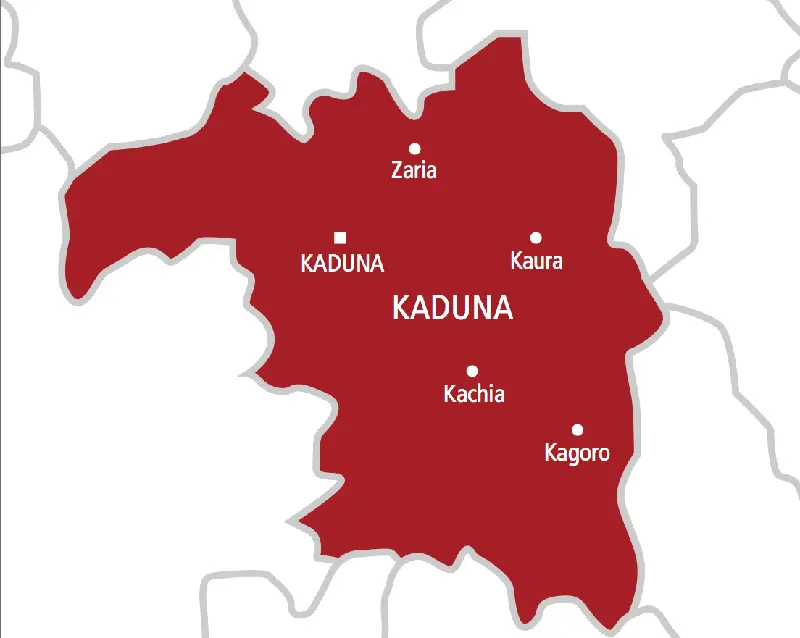
    The two journalists who were kidnapped in Kaduna by bandits a week ago have been set free.

    It would be recalled that Abdulgafar Alabelewe who works with TheNation Newspaper and Aodu of Blueprint Newspaper were abducted from their homes in the Danhonu community in Millennium City of Chikun Local Government Area of Kaduna on Saturday, July 7th.

    Their release is yet to be confirmed by the police, a relative of one of the victims told Channel Television that they were released on Saturday afternoon, and are on their way to Abuja for medical attention

    It was gathered that one of the journalists Abdulgafar Alabelewe was released along with his wife and two children who were kidnapped together.

    The Chairman of the Nigeria Union of Journalists (NUJ) Kaduna State Council Asma’u Yawo Halilu also confirmed the release of their freedom.

    “To the glory of God Almighty, our colleagues, Abdulgafar Alabelewe, Abduraheem Aodu, and their families have been released,” the statement read.

    “The Council extends her profound gratitude to the office of the CP, Kaduna State Command, office of the NSA, the DG, DSS, the Inspector General of Police, Kaduna State government, the NUJ President, and all well-meaning Nigerians that prayed along with us during the trying time.”

    The rescued journalists have been taken to Abuja for debriefing by security agencies and also to get medical treatment.

  • Umahi speaks after allegedly walking out on journalist

    Umahi speaks after allegedly walking out on journalist

    Minister of Works, Sen. David Umahi, has denied snubbing newsmen who honoured his ministry’s invitation for a news conference in Abuja.

    According to reports, the minister allegedly walked out on the newsmen during his turn to present this ministry’s score card after one year of President Bola Tinubu Presidency.

    However, Umahi, while speaking with newsmen in Abakaliki after participating in activities marking Gov. Francis Nwifuru’s one year in office described the allegation as untrue.

    The minister said he only wanted to appreciate selected media houses for their commendable coverage of his ministry’s activities.

    “They all worked hard for us during President Bola Tinubu ‘s inauguration of projects in Lagos and I wanted to thank them profusely.

    “I wanted the appreciation to be surprising to the selected media houses but my media aide didn’t handle it properly.

    He said the event was fixed for 2.pm on May. 28 but his aide told him that those set of journalists were covering an inauguration.

    “We then shifted the event to 3.pm though my flight to Ebonyi for the governor’s inauguration of projects was also slated for the same time.

    “My aide informed me that the event was set by 3.30pm but when I got to the ministry’s hall, there was no single camera.

    “The only camera on sight was from my ministry and I became very angry with the aide,” he said.

    Umahi said he demanded that the event be shifted to Monday, June 3 because if it had been held, the surprise element would be defeated.

    “I will also be faced with a number of journalists that I couldn’t handle so my media aide did not handle it properly.

    “Reports of shunning journalists, therefore, do not exist because I cannot invite and shun them at the same time,” the minister said.

    He said that he would still offer appreciation to the group of media houses he considered special to the ministry.

  • ECOWAS Court dismisses suit seeking N110m compensation for slain journalists

    ECOWAS Court dismisses suit seeking N110m compensation for slain journalists

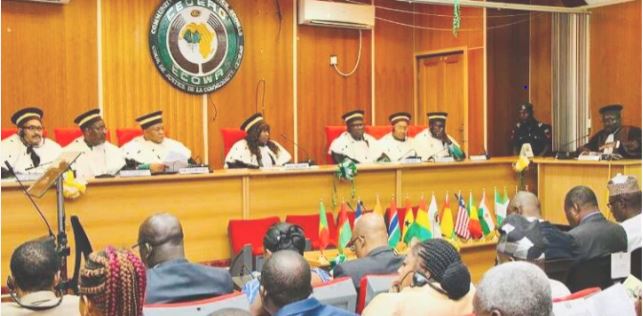
    The ECOWAS Court of Justice on Monday in Abuja dismissed a petition filed by Media Rights Agenda (MRA), an NGO, seeking to compel the Nigerian government to pay N10 million reparation each to the families of 11 deceased journalists.

    MRA had in the suit filed in 2021 also sought to compel the Nigerian government to properly investigate the unresolved killing of the journalists between 1998 and 2021, identify, and prosecute their killers.

    Delivering judgment, a three-member panel of the Court, presided over by Justice Gberi-be Ouattara, and delivered by Justice Dupe Atoki, held that the 11 journalists could not be equated as “public” with regards to proof of the victims’ status and dismissed the group’s petition.

    The Court also held that although the murder of the said 11 journalists was a gross violation of their rights, it was bereft of jurisdiction to entertain and award reparations for the victims.

    Earlier during the hearing of the case, MRA’s counsel, Mr Darlington Onyekwere, had argued that States were not only prohibited from taking life outside the permissible circumstances allowed by law but that they also had a positive obligation to act to prevent the loss of life.

    The group’s counsel had argued that the MRA’s case was largely predicated on the African Charter, which the Supreme Court of Nigeria had held in Abacha & Ors v. Fawehinmi (2001) 1 CHR 20 to supersede domestic laws.

    The human rights lawyer also contended that the Government could not rely on domestic laws to escape liability for the human rights violations complained of in the case.

    Onyekwere had contended that the victims had been properly identified and could not have been made parties to the suit, contrary to the repeated arguments of the Government.

    The MRA, therefore, prayed the court to direct the Federal Government to pay the families of each of the journalists N10 million as reparation, insisting that in spite of the Nigerian government’s obligations under various domestic, regional, and international instruments.

    Onyekwere had argued: “The government has failed, refused, neglected and omitted to effectively investigate, prosecute and punish the killers of the journalists, who were murdered while exercising their fundamental right to freedom of expression and of the press or under circumstances connected to the exercise of these rights.

    “Unless the court intervenes, the government will neither adopt measures to protect journalists nor cause any real, transparent, and impartial investigations into the killings of journalists in Nigeria, while the perpetrators of such dastardly acts will not be prosecuted and punished.”

    He, therefore, prayed for a declaration, “that the failure of the Federal Government to adopt effective measures to protect and guarantee the safety of the 11 journalists under Article 66(2)(c) of the Revised ECOWAS Treaty, 1993 and Principle 20 of the Declaration of Principles on Freedom of Expression and Access to Information in Africa, amounts to a breach of the obligation imposed on the Government by the ACHPR and the Revised ECOWAS Treaty,” among others.

    However, responding, Mr Solomon Ogunlowo, the counsel to the Federal Government/Respondents, and Principal State Counsel in the Federal Ministry of Justice, had urged the Court to decline jurisdiction and hold that MRA’s suit was inadmissible.

    Ogunlowo had challenged the competence and admissibility of MRA’s suit and contended that the Court lacked jurisdiction in the matter, stressing that the MRA lacked the locus standi to file and maintain the suit.

    MRA, he argued, was not the victim of the human rights allegedly violated and which it was seeking to protect through the suit, adding that no victim had been properly identified and made a party to the suit.

    According to him, MRA did not suffer any wrong or injury directly or indirectly on which basis the application could be maintained.

    The deceased journalists, over whom MRA filed the suit on August 16, 2021, were: Mr Tunde Oladepo, Bureau Chief of The Guardian newspaper’s Ogun State office, killed in Abeokuta on Feb. 26, 1998 by gunmen who entered his home early in the morning on that day and shot him dead in the presence of his wife and two young children.

    Mr Okezie Amauben, publisher of Newsservice magazine was reportedly arbitrarily shot and killed by a police officer in Enugu on Sept. 2, 1998, while Mr Fidelis Ikwuebe, a freelance journalist for The Guardian newspaper, was abducted and murdered on April 18.

    Mr Sam Nimfa-Jan, a journalist with Details magazine in Jos, Plateau State, was killed outside the prison in Kafanchan, Kaduna State on May 27, 1999, while covering a communal conflict in Zangon-Kataf.

    Nimfa-Jan’s body was found with arrows protruding from his back.

    Mr Samson Boyi, a photojournalist with the Adamawa State-owned newspaper, The Scope, was killed by armed men on Nov. 5, 1999 while on assignment to cover a visit by the then state governor, Mr Boni Haruna, to the neighbouring Bauchi State.

    Mr Bayo Ohu, then an assistant news editor with The Guardian newspaper, was shot by armed men in his home in Lagos on Sept. 20, 2009.

    Mr Nathan Dabak, deputy editor, and Mr Sunday Gyang Bwede, reporter, both with the Light Bearer, a monthly newspaper owned by the Church of Christ in Nigeria, were attacked and killed by a mob in Jos on April 24, 2010, while on a reporting assignment.

    Mr. Zakariya Isa, a reporter/cameraman with the Nigerian Television Authority (NTA) was killed on Oct. 22, 2011, while Mr Enenche Akogwu, a reporter and camera operator with Channels Television, was killed in Kano on Jan. 20, 2012 by gunmen suspected to be Boko Haram members.

    Mr Precious Owolabi, a National Youth Service Corps (NYSC) member carrying out his primary assignment as a reporter with Channels Television, was shot and killed in Abuja on July 22, 2019 while covering a protest by members of the Islamic Movement of Nigeria that had resulted in a confrontation with the Nigerian Police.

    The Court did not award any cost against the petitioners and held that parties in the case should bear the cost of litigation.

    NAN
  • SERAP sues Tinubu over unlawful ban of 25 journalists

    SERAP sues Tinubu over unlawful ban of 25 journalists

    Socio-Economic Rights and Accountability Project (SERAP) has filed a lawsuit against President Bola Tinubu over “the unlawful ban and withdrawal of the accreditations of 25 journalists and media houses from covering the Presidential Villa.”

    According to reports, the Federal Government recently withdrew the accreditations of some 25 journalists from covering activities at the Presidential Villa, Abuja. The affected journalists were simply told at the main gate of the Presidential Villa to submit their accreditation tags.

    In the suit number FHC/L/CS/1766/23 filed last Friday at the Federal High Court in Lagos, SERAP is seeking: “an order to direct and compel President Tinubu to reverse the revocation of the accreditations and ban on 25 journalists and media houses from covering the Presidential Villa.”

    SERAP is seeking: “an order of perpetual injunction to restrain President Tinubu or any other authority, person or group of persons from arbitrarily and unilaterally revoking the accreditations of any journalists and media houses from covering the Presidential Villa.”

    SERAP is also seeking: “a declaration that the withdrawal and revocation of accreditation tags and ban on the journalists and media houses from covering the Presidential Villa without any lawful justifications is inconsistent with the rights to freedom of expression, access to information, participation, and media freedom.”

    In the suit, SERAP is arguing that: “If not reversed, the arbitrary ban on the journalists from covering the Presidential Villa would open the door to other cases of arbitrariness and would restrict people’s right to freedom of expression, access to information, participation, and media freedom.”

    SERAP is also arguing that, “The withdrawal of the accreditations of the journalists is without any lawful justifications. It is inconsistent and incompatible with plurality of voices, diversity of voices, non-discrimination, and just demands of a democratic society, as well as the public interest.”

    The suit filed on behalf of SERAP its lawyers Ebun-Olu Adegboruwa, SAN, Kolawole Oluwadare, and Ms Valentina Adegoke, read in part: “The ban on the journalists from covering the Presidential Villa fails to meet the requirements of legality, necessity, and proportionality.”

    “The media plays an essential role as a vehicle or instrument for the exercise of freedom of expression and access to information – in its individual and collective aspects – in a democratic society.”

    “The existence of a free, independent, vigorous, pluralistic, and diverse media is essential for the proper functioning of a democratic society.”

    “The free circulation of ideas and news is not possible except in the context of a plurality of sources of information and media outlets. The lack of plurality in sources of information is a serious obstacle for the functioning of democracy.”

    “The exercise of the right to freedom of expression through the media is a guarantee that is fundamental for advancing the collective deliberative process on public and democratic issues.”

    “The strengthening of the guarantee of freedom of expression is a precondition for the exercise of other human rights, as well as a precondition to the right to participation to be informed and reasoned.”

    “Under the Nigerian Constitution 1999 [as amended] and human rights treaties to which Nigeria is a state party, freedom and diversity must be guiding principles in the measures to promote media freedom. The ban on the 25 journalists is entirely inconsistent and incompatible with these principles.”

    “The Federal Government should aspire to promote and expand the scope of media freedom, access to information, freedom of expression, and citizens’ participation, not restrict these fundamental freedoms.”

    “Barring these journalists and media houses from covering the Presidential Villa is to prevent them from carrying out their legitimate constitutional responsibility.”

    “The withdrawal of the accreditation tags of these journalists directly violates media freedom and human rights including access to information and the right to participation. It would have a significant chilling effect on newsgathering and reporting functions, and may lead to self-censorship.”

    “The withdrawal of the accreditations of the journalists would construct barriers between Nigerians and certain information about the operations of their government, something which they have a constitutional right to receive.”

    “Media freedom, access to information and the right to participation are necessary for the maintenance of an open and accountable government. These freedoms are so fundamental in a democracy that they trump any vague grounds of ‘security concerns and overcrowding of the press gallery area.’”

    “According to reports, the Federal Government on 18 August 2023 withdrew the accreditation tags of some 25 journalists and media houses from covering activities at the Presidential Villa, Abuja.”

    “The banned journalists reportedly include those from Vanguard newspaper; Galaxy TV; Ben TV; MITV; ITV Abuja; PromptNews, ONTV, and Liberty. Other media personnel affected by the withdrawal are mostly reporters and cameramen from broadcast, print, and online media outlets.”

    “Under section 22 of the Nigerian Constitution, the mass media including ‘the press, radio, television and other agencies of the mass media shall at all times be free to uphold the fundamental objectives contained in this Chapter and uphold the responsibility and accountability of the Government to the people.’”

    “Section 14(2)(c) of the Constitution provides that ‘the participation by the people in their government shall be ensured in accordance with the provisions of this Constitution.’”

    “Similarly, Article 9 of the African Charter on Human and Peoples’ Rights provides that, ‘Every individual shall have the right to receive information. Every individual shall have the right to express and disseminate his opinions.’”

    “Article 13 of the Charter also provides that, ‘Every citizen shall have the right to participate freely in the government of his country. Every citizen shall have the right of equal access to the public service of his country. Every individual shall have the right of access to public property and services.’”

    “Articles 19 and 25 of the International Covenant on Civil and Political Rights contain similar provisions.”

    No date has been fixed for the hearing of the suit.

  • Ignore unnecessary reports capable of over heating the system- NUJ Patron tells Cross River Journalists

    Ignore unnecessary reports capable of over heating the system- NUJ Patron tells Cross River Journalists

    Wevole Ezin, Calabar

    The Patron of the Nigeria Union of Journalists (NUJ) in Cross River state, Bishop Emmah Isong has called on journalists in the state to avoid what he described as unnecessary reports that could cause division between the past administration of Senator Ben Ayade and the present administration of Governor Bassey Otu.

    He made the call on Wednesday while addressing some Newsmen in Calabar, following claims from some media reports credited to the Chief Press Secretary (CPS) to the governor, Emmanuel Ogbeche alleging that the previous government was giving approvals through WhatsApp.

    Bishop Isong who is also the National Publicity Secretary of the Pentecostal Fellowship of Nigeria (PFN). charged the people of the state to ignore such media reports.

    He said, “Cross Riverians should ignore who ever flashed that report and I am speaking as the Patron of NUJ that People should avoid media reports that will unnecessarily over heat the system and create imaginary issues.

    “The state governor Prince Bassey Otu is not here to witch hunt anybody but to lay a new foundation and like I prayed at the Solemn Assembly in Calabar recently, that God should heal our land. To me the new Chief Press Secretary just had a parley with his own constituency and I can vouch that he is competent to pilot the affairs of that office effectively and certainly journalists will enjoy his tenure”, he urged.

    “WhatsApp or no WhatsApp nobody has produced the WhatsApp approvals and there is no WhatsApp message that can tantamount to approvals. As far as I know there was a Bureau that approved Budgets and there was an Accountant General and due processes followed in financial transactions.

    Bishop Isong who is also the General Overseer of the Christian Central Chapel International (CCCI) further stated, “I was the Chairman of the State Anti Tax Agency and we handed reports to the transition committee and there was no such issue like approvals on WhatsApp. People are just struggling to create amenity between the former governor and the new governor. They want to create an imaginary conflict . The Vehicle is stuck in the mud and while we are trying to push it to jumpstart, nobody should take us backwards”.

    “The terrain of the last political dispensation was so complicated that even if you cough or sneeze people will misunderstand you. You know that in Cross River state we are lucky that the state produced an APC governor to succeed a sitting APC Governor which shows a seamless transition.

    “The new CPS means well for the state. Be that as it may it does not mean that there were no infractions on some past policies and as far as I know no person or government is perfect” .

    ##