Tag: Niger Delta

  • Isoko group queries Zamfara gold deal with CBN

    Isoko group queries Zamfara gold deal with CBN

    A flagship socio-political organization of the Isoko nation known as the Isoko Advancement Network (IAN) has warned that the inequalities in the handling of the exploitation of natural resources in Nigeria can trigger youth restiveness in the Niger Delta.

    The group expressed disappointment with the leadership of the National Assembly for blowing a muted trumpet when the matter regarding the sale of gold worth N5 billion by Zamfara State to the Central Bank of Nigeria was raised on the floor of the Senate by the Deputy Senate President, Senator Ovie Omo-Agege.

    In a statement signed by the Chairman of IAN, Chief Paul John Odhomor, the group noted that the deafening silence of the Senators by deliberately refusing to debate the issue on the floor of the Senate sends dangerous signals to the people of the Niger Delta region that contributes so much to the national GDP.

    The statement reads: “The IAN is aware that solid mineral is one of the items in the Exclusive Legislative List of the 1999 Constitution (as amended) like oil and gas. It is incredible that the man from Gusau can sell gold directly to the apex bank and an Isoko man from the Niger Delta cannot sell crude oil and gas directly to the NNPC.

    “The IAN frowns at this negative development and warned that this kind of inequalities in the handling of the exploitation of natural resources in Nigeria can trigger youth restiveness in the Delta. The IAN noted that the youths of the Niger Delta region are already agitated as there was no justification for the criminalization of their activities with oil and gas facilities in the region while their Zamfara counterparts approaches the vault of the CBN as off takers of their gold.

    “The Isoko Advancement Network called on the Federal Government to implement relevant policies towards solid mineral exploration and exploitation with a view to improving the balance sheet of the Country”.

  • 2021 budget: How to achieve oil production benchmark – Omo-Agege

    2021 budget: How to achieve oil production benchmark – Omo-Agege

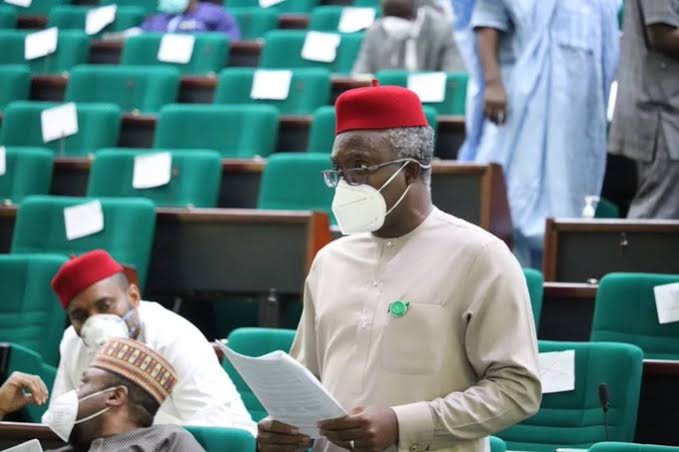
    The Deputy President of the Nigerian Senate, Senator Ovie Omo-Agege has said for the nation to be able to achieve the oil production benchmark as stipulated in the 2021 budget, certain things must be put in place.

    TheNewsGuru.com (TNG) reports Senator Omo-Agege stated this on Wednesday as the Senate began debate on the 2021 budget estimate of N13.08 trillion recently presented to a joint session of the National Assembly by President Muhammadu Buhari.

    “This 2021 budget proposal is based on two predicates. The first is the 40-dollar benchmark and the second is the oil production estimate of 1.86 million barrels per day.

    “Like I indicated in the debate for the 2020 budget, for us to be able to achieve this 1.86 million barrels per day, certain things must be in place.

    “We must have peace and indeed, maintain the peace in the Niger Delta region.

    “For those of us that represent the region, we are very worried for these are the people that represent the goose that lays the golden eggs that take care of the economy. But, majority of them are jobless; there is nothing for them.

    “That is why we maintain that the youths in these communities must be engaged and the only way they can be engaged is for these oil companies who explore oil in these communities to help in creating jobs for these people and the only way they can do this is to have their business operating headquarters located in the Niger Delta,” Omo-Agege stated.

    Also, the Delta Central Senator lamented the current state of the Benin-Sapele-Warri road, stressing the road is nothing to write home about.

    “The infrastructures that we have in that region are dilapidated. The roads are bad. A journey of 45 minutes now takes six hours.

    “As we get closer to another Christmas period with an expected influx of people and vehicular movements, something should be done right away to fix all the bad roads in the Niger Delta.

    “It is bad enough that the country is in bad shape right now but we need to try and put the infrastructures we already have in order,” the Senator said.

    He further stressed on the need to focus on solid minerals as means of revenue generation for the nation. He stressed solid minerals belong to the nation at large.

    “Secondly, we should also focus on our solid minerals. We have gold in some Northern States. I have seen the Governor of Zamfara selling gold worth N5 billion to the Central Bank of Nigeria. The golds do not belong to the state but the nation at large,” the Senator argued.

  • Wike rubbishes Zamfara gold comments ascribed to him

    Wike rubbishes Zamfara gold comments ascribed to him

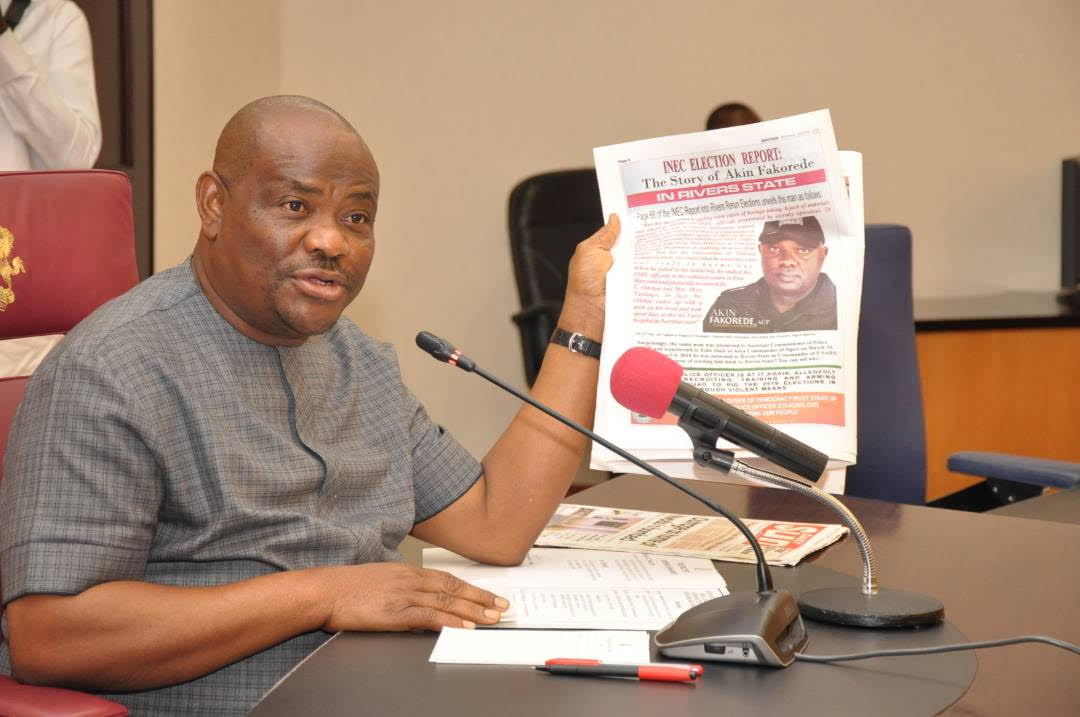
    The Rivers State Government has rubbished comments ascribed to Governor Nyesom Wike in connection with the Central Bank of Nigeria (CBN) purchasing N5 billion worth of gold from the Zamfara State Government.

    TheNewsGuru.com (TNG) reports the Rivers State Government made this known via a statement released on Sunday by the Rivers State Commissioner for Information and Communications, Paulinus Nsirim.

    According to the statement, Governor Wike never expressed unhappiness with the decision of the CBN to buy gold from Zamfara State or demanded that gold should be made a national cake or that he too would proceed to own a gold well in Zamfara State.

    The statement reads: “The attention of the Rivers State Government has been drawn to a completely false and misleading story circulating in the Social Media, that Governor Nyesom Wike of Rivers State made some remarks in connection with a report that the Central Bank of Nigeria will purchase N 5billion worth of Gold from the Zamfara State Government.

    “The purveyors of this barefaced fallacy suggested in their warped story, that Governor Wike was unhappy with the decision of the CBN to buy Gold from Zamfara State.

    “They claimed that Governor Wike who lamented that the same privileged attention has not been given to the oil from Rivers State, demanded that Gold should be made a national cake, adding that he too would proceed to own a gold well in Zamfara State.

    “Let us state here categorically that Governor Wike never made such a statement. Infact, we note with a sense of relief, that no major, mainstream News media or Press Organization, either print, electronic or online, attached to Government House, Port Harcourt, carried this concocted story.

    “So it is a wonder where the mushroom, less than credible social media outlets got the comments, which they claimed Governor Wike made “while addressing the Press.”

    “It has indeed become the ugly penchant in recent times, of some cynical and dubious detractors, to drop or insert Governor Wike’s name in their calculated crusade to ignite unprovoked conflict with the hidden ploy to disrupt the recently emerging warm cordiality which has defined the relationship between him and some leaders across geopolitical divides in the country.

    “These naysayers have also commenced a devious gambit to insidiously tarnish the overwhelming goodwill which the burgeoning image and reputation of Governor Wike has been enjoying across the country and this latest story is simply the latest installment of their failed efforts.

    “Those familiar with Governor Wike will know that he does not need to resort to such churlish and petty grandstanding portrayed in the silly story, to speak up on any matter whatsoever.

    “The write up is thus just another figment of the convoluted imagination of its authors. They goofed big time on this one.

    “Nigerians are therefore advised to completely disregard the story, especially now that the Federal Government, the CBN and the Zamfara State Government have all come out to speak clearly on the matter and set the records straight”.

  • Has Niger Delta missed the boat?, AKS as Metaphor II, By Dele Sobowale

    Has Niger Delta missed the boat?, AKS as Metaphor II, By Dele Sobowale

    “Opportunity lost can never be regained.”

    In the good old days, pupils in public primary schools received a strong dose of folks wisdom along with their lessons in English. My all time favourite teacher – Mr Udoh – who shaped my life at St Peter’s Primary School, Faji, Lagos, was responsible for drumming that piece of sage wisdom into our small skulls in Standard Four in 1956. It was the sort of wisdom most Niger Delta political leaders – President, Governors especially, Ministers, Senators, Speakers of States Houses of Assemblies – never understood or applied to governance in the region when God smiled on the neglected people by giving them crude oil.

    But, of all the leaders, especially since 1999, the only one who had a good grasp of the fleeting nature of their collective great fortune was Obong Victor Attah. That was why of all Nigerian political leaders I voluntarily became his disciple. After taking a glance at the first edition of ATTAH ON RESOURCE CONTROL, I made up my mind that here at last is one Nigerian politician to follow – because he had his gaze fixed firmly on the future of his people. And, by people I mean the entire Niger Delta.

    Readers have three ways they can read the book. First, copies of the book are available in the libraries of ALL NIGERIAN universities – Federal, State and private. Obong Attah gave the permission for the distribution and our Area Boys at UniJankara either posted or hand-delivered all the copies to the universities.

    Second, the books are available for reading free of charge on our site. Already an incredible 4 million visits had been recorded. Third, those who want their own copy can just ask me. Right now, as a back up to this article, cover price is now N2000 – excluding postage or delivery charges until the end of November.

    It is a great pity that Nigerians, particularly the youths, have lost the reading culture. But, if there is one book all Niger Deltans must read, it is second edition of ATTAH ON RESOURCE CONTROL – not because I edited it, but because it serves as a starting point in the struggle for Restructuring or true Federalism or, more to the point an end to economic parasitism of the rest of the country on the nine oil producing states. For once, Attah should no longer fight alone. Everybody in the region must say NO to the brutal exploitation of the zone.

    “In every country, every step to health is an insult to those who live on its sickness.” Bernard Malamud, in THE FIXER.

    Next to the parasites sucking the life-blood out of the region, the second worst enemies of the people of the Niger Delta are their own people – especially the governments at state level. When last week we published N40 trillion as the funds which had accrued to the states in the region in 18 years, we deliberately ended the article by pointing to the enormity of financial opportunities and the disappointing results which are visible in all the states – with few exceptions.

    Surprising as it might appear to most Nigerians, the Age of Oil in Nigeria reached its peak between 2007and 2014. Close to 55 per cent of the revenue from crude was collected and mostly wasted during the period – which included the years Jonathan was President. Any state could have served to illustrate how N40 trillion was received but there was little to show. The article below was published in April 2011. There should be no problem understanding the meaning.

    AKPABIO: THE FIRST TRILLION NAIRA GOVERNOR — 1

    “0803-525-0750

    …Sir you need another visit to A/Ibom to see how Akpabio has built on d foundation your friend, Attah, whom I regard as d founding father of modern A/Ibom laid. U’ll be amazed at d transformation. Tolu”.

    That message was at the tail end of the text sent to me by my friend Tolu on March 13, 2011. As it turned out, some other folks anxious for me to visit Akwa Ibom, had not only sent me a leaflet titled BONDAGES OF AKPABIOISM, which they claim is now being widely distributed in the state. Going under the name of FREE AKWA IBOM COMMITTEE, FAIC, the group in the leaflet under reference, drew everybody’s attention to the fact that Governor Akpabio had in the first three years in office collected from the Federation account and other sources N700 billion. They also pointed out that this year’s budget, which had just been passed by the State’s House of Assembly amounted to N310 billion. They did not tell me but we do nothing else at UniJankara other than add figures. If those claims are true, and at least the N310 billion is true, then Governor Godswill Akpabio would have become Nigeria’s first governor to have N1 trillion to spend in four years. This is vital because of people like Tolu who make unfair and misleading economic and performance comparisons between various governors of Nigeria.

    It is a fact supported by the monthly publications of the federal Ministry of Finance, that from 2007, Akwa Ibom had collected more revenue than the poorest six states ( Kwara, Ebonyi,Ekiti, Plateau, Gombe and Nassarawa) put together. In actual fact only a blockhead or someone being deliberately mischievous will compare Akwa Ibom with Nassarawa or Ekiti. The sensible comparison is between those states in “The Premiership of States” – Akwa Ibom, Rivers, Delta, Bayelsa and Lagos. And that is going to be the point of departure.

    FAIC, as pointed out earlier not only sent me a leaflet, disclosing how much the state government had spent in the last three years and what is budgeted for this year, they also made a startling disclosure. They claimed that all the previous governments of Akwa Ibom since its creation in 1987, had collected less than half of what the current government had collected in three years. Indeed, from the figures provided, Governor Akpabio will have only N70 billion less to spend this year alone than other administrations in 23 years! And they assert that the people of Akwa Ibom had not got value for money. So, I was invited. Given my busy schedule, it was going to be a short visit, so I asked to be shown the Tropicana Hotel and Entertainment Complex which Governor Akpabio had promised, back in 2007, would have been be completed by now employing 5,000 people. The FAIC leaflet had claimed the Tropicana is not anywhere near completion. So, I went last week to verify. Unless the two eyes I took to Uyo had gone completely blind by the time of my arrival, there was no Tropicana Hotel employing anybody.

    So Tolu, let me turn the table around and ask you to visit Uyo again and tell all Nigerians if there is a Tropicana. FAIC made other allegations bordering on massive deception of the public. Since, this is not an attempt to pull down the government of Governor Akpabio, but to set out the facts as best as I can, there is no need to list seriatim all they have said in the leaflet.

    But, let me mention one other issue in contention. Governor Akpabio in one of the several advertisements proclaiming his achievements had claimed as follows: “TRIPLED SCHOOL ENROLLMENT”. That would mean that two out of three kids in schools in Akwa Ibom today started school in 2007. FAIC considers this a fraudulent claim. One of their spokesmen, who had called to invite me, challenged the governor to tell Nigerians if all those newly enrolled were in primary one or was the tripling from primary through secondary and tertiary institutions (including nursing school, technical colleges etc). Two, he demanded to know how it was possible to triple school enrollment without building additional schools/classrooms and recruiting teachers. Thank God, I am not the governor, so I don’t have to answer those questions.”

    As predicted in the article in April 2011, the Akwa Ibom State Government ended the year with over N1 trillion revenue collected from all sources in four years. That was not all, the next four years were even better. An estimated N1.3 trillion was again collected. Thus in eight years, about N2.3 trillion landed in that state. Yet, the next four years produced no significant improvement from the standpoint of value for money.

    I have provided some pictures of the projects which were started and either totally completed by Governor Victor Attah by the time he left office in the book IT IS WELL WITH MY SOUL. For instance, the VICTOR ATTAH INTERNATIONAL AIRPORT was ninety per cent completed by May 29, 2007. Yet, when the airport was commissioned in September 2007, just four months after, cheap and dishonest propagandists claimed it as one of the projects resulting in “uncommon transformation” from 2007 to 2015.

    That was not all. The Independent Power Plant, IPP, which was commissioned by President Obasanjo was given a facelift and President Yar’Adua was invited to come and commission it once again. Fortunately, a photograph of OBJ commissioning it was available with me. I fired off a letter to Yar’Adua warning him about the project. The late President cancelled his trip to the state for the project. Yet, this was another one of the projects which people like Tolu were shown as the achievement of the government at the time. Even now, a fact-finding tour of the entire Akwa Ibom state, during which projects completed by Governors Attah (1999-2007) and Udom Emmanuel (2015-2019) will still reveal how little there is to show for N2.3 trillion collected from 2007 to 2015.

    UUTH AND THE 17 DIALYSIS MACHINE SAGA

    Among the questionable projects claimed to be embarked upon was the construction of a Dialysis Unit equipped with seventeen machines situated in the University of Uyo Teaching Hospital — among the first year’s achievement. Again, I was there in the Dialysis unit a few months earlier making inquiries on behalf of a former VANGUARD staff. There were only three machines in the small unit and the staff told me it was built by Attah. My article asking “Where are 17 Dailysis Units” provoked a rejoinder by scared top officials of UUTH at first. But, when I sent them pictures of the unit, they quietly apologised. Till today, nobody has explained what happened to the funds allocated for and spent on the UUTH Dialysis Unit. I even know the contractor who supplied the three machines for which Attah paid.

    I have gone to great lengths about Akwa Ibom state because I was more informed about the state than any other one. Let me hasten to add that about the same amount – N2.3trillion — was collected in the same period by Rivers State government. There, again, it is extremely difficult to see development in the state commensurate with the revenue collected. Yet, in each of these states, indigenes occupied the State Houses of Assembly. There were Speakers and Members who looked the other way as governments fail to deliver services and lay the foundations for perpetual economic growth long after oil has seized to be a major factor. Now that the Age of Oil is coming to a close, the future looks bleak. There are no jobs to engage the growing population. The only options left are tough. One, the Niger Delta must unite and fight for RESOURCE CONTROL as soon as possible. Two, they must tackle the vultures who when the opportunity came robbed the majority and left them in dire straits.

  • Hon Nwawuba addresses intricacies of PIB

    Hon Nwawuba addresses intricacies of PIB

    Given the delay in the passage of the Petroleum Industry Bill (PIB), the Deputy Chairman, House of Representatives Committee on the Niger Delta, Hon Henry Nwawuba has said care must be taken for the National Assembly (NASS) not to pass a bill that will not be of any good to the Nigerian oil and gas industry.

    TheNewsGuru.com (TNG) reports Hon Nwawuba, at an event organized by the Nigerian Natural Resource Charter (NNRC) on Friday, stated this, while also addressing the intricacies of the much-awaited PIB that was recently forwarded to the NASS by President Muhammadu Buhari.

    Noting that petroleum sector reforms started in Nigeria over 18 years ago, the Lawmaker said the entire PIB document forwarded to the NASS by Buhari was yet to be committed to the technical committee for legislative fireworks to commence.

    He said, “Petroleum sector reforms started in Nigeria over 18 years ago. Most of the other countries we started this journey with have moved along in the sector with transparency and accountability while Nigeria is still struggling with the PIB.

    “We have been trying to pass this particular piece of legislation since the 6th Assembly. This matter is now of a certain urgency. We must be nimble but we must be thorough. Since we started the journey, the oil industry landscape has changed significantly.

    “Care must be taken so we do not end up passing an obsolete bill. Having taken so long, it is critical that we get it right first time, particularly with the Host Community Bill. An “inclusive” bill that captures the aspirations of all stakeholders”.

    The member representing Mbaitolu/Ikeduru Federal Constituency of Imo State further stated that a paradigm shift was needed to guarantee that the right stakeholders are consulted as against the method of speaking with a few representative groups who have hijacked the process to further personal agenda.

    “The entire PIB document is yet to be committed to the technical committee for legislative fireworks to commence and believe me, we will be thorough.

    “However, as part of our bill making cycle we will be conducting a public hearing to allow for all interested groups, civil societies, religious bodies, youth groups etc to send in memoranda and representations.

    “The final PIB we will produce will be a harmonised document. The process of making this bill will be exhaustive. It will recognize a broad spectrum of stakeholders that will hopefully include unborn children and infants, adolescents, women, youth, chiefs and traditional rulers,” the Lawmaker stated.

    Speaking on the National Oil Spill Detection & Response Agency (NOSDRA) amendment bill, Nwawuba said, “the bill was passed by both chambers in 8th Assembly but was denied assent by Mr. President. We have taken advantage of our House Rule (Order 12) and re-introduced it in this 9th Assembly. It has now passed 1st and 2nd reading.

    “One of the mandates of NOSDRA is to restore and preserve our environment by ensuring best oil fields, storage and transmission practices in exploration, production and use of oil in the quest to achieve sustainable development in Nigeria.

    “We are working to have a technical committee set up to harmonize all the grey areas raised by Mr President, particularly the regulatory overlaps, and hopefully an emergency fund to react to environmental emergencies”.

    The Lawmaker also addressed the fate of the Niger Delta region after oil is long a thing of the past just like Enugu and Benue States stopped being relevant after the coal age.

    “Nigeria has a proven deposit of about 40 billion barrels of crude. By my calculation, if we drill at an average of 2 billion barrels a day, we will run out of crude by the year 2075. Our population by then will be well over 500 million people.

    “Our focus must be on those things that are necessary to navigate the future. There should be zero tolerance for wastage of resources. We need financial planning models to withstand future internal and external shocks in the event of depletion of our crude reserves.

    “So far we have failed to add value to our crude oil resources. We need to diversify the oil economy itself before talking about other sectors. If we had a robust mid stream industry we wont be where we are today.

    “Assuming 50% of our [crude oil] production is refined domestically we wont be here today. This is all down to policy failure. Why are refineries not working? Because we have the wrong policies. If we had the capacity to refine 1 million bpd think of how many jobs that will create.

    “Oil currently contributes about 60% to our economy earnings but only about 6-8% of our GDP. Have we used our oil resources well? The answer is no. We need to sterilize crude oil from our national budget so that our oil earnings will be used to build for the future.

    “We need to be shifting away from what we have been doing to what we must be doing. Our dependence on the extractive industries and fossil fuel deposits has exposed and alienated our economy from growth,” Nwawuba stated.

    Also speaking on the current state of the Strategic Implementation Work Plan (SIWP), Nwawuba said, “the SIWP was designed to pool all ongoing interventions in the Niger Delta and donor activities in order to stop the duplication of projects by institutions and the misapplication of those funds by reinvesting in projects already undertaken by another entity.

    “It was about the different ongoing live projects and monitoring those projects, so that they’re actionable. The SIWP was put forward at the Federal Executive Council (FEC) but was not approved.

    “So the duplicity continues unchecked leading to those in Niger Delta not benefitting. The National assembly will continue to advocate for the SIWP to be approved. I commit to be at the forefront of that push”.

  • Jonathan urges Niger Delta youths to shun violence

    Jonathan urges Niger Delta youths to shun violence

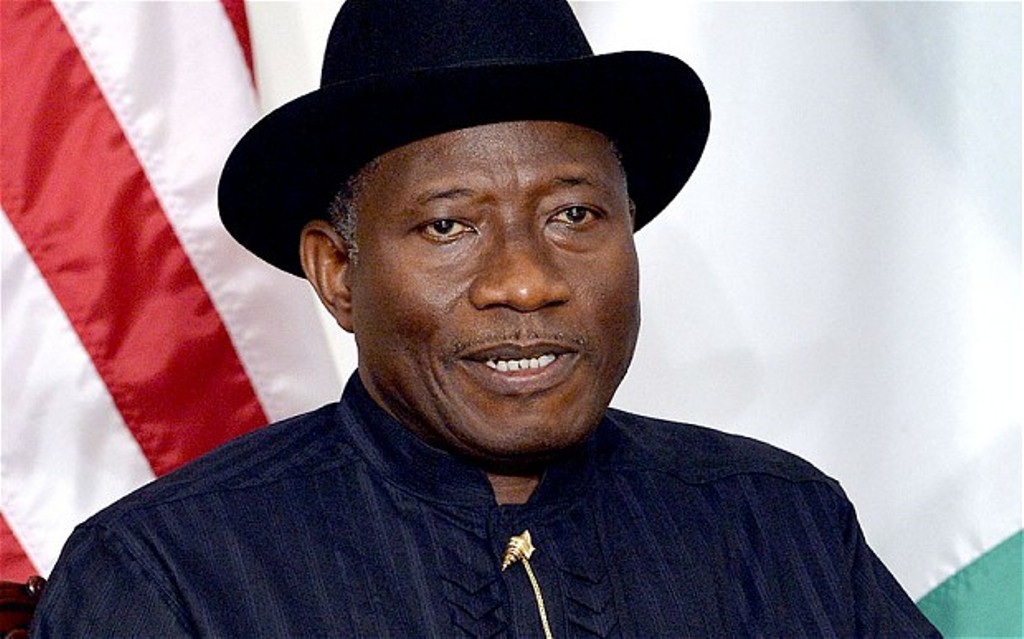
    Former President Goodluck Jonathan on Tuesday urged Niger Delta youths to shun violence and embrace peace for the development of the region and the country at large.

    Jonathan gave the advice when the executive of Movement for Survival of Izon Ethnic Nationality in the Niger Delta (MOSIEND), paid him a visit in Yenagoa.

    The former president cautioned them against restiveness in the region which he said supports the economy of the nation through production of oil and gas.

    Jonathan noted that youths remained the focus of most government development policies, saying that any attempt to cause violence would work against their interests.

    “The future belongs to the youths who are at the centre of most developmental endeavours and policies of government; so, the diversion of youthful energy towards violence is not desirable at all.

    “The future of this country belongs to the young ones not for those of us who have given our youthful years and are at the verge of exiting the scene. The youths should resist every attempt to take to violence.

    “Peace in the Niger Delta is very essential as any disturbance in the Niger Delta affects the country because the region supports the economy of the nation,’’ Jonathan said.

    Earlier, MOSIEND President, Mr Kenedy Tonjo-West said the purpose of the visit was to seek the advice of the statesman on the plethora of challenges confronting the Ijaw nation, Niger Delta and Nigeria.

    Tonjo-West called for the implementation of the recommendations of the “2014 National Conference.’’

    He appealed to Jonathan to mobilise former Heads of State to persuade the Federal Government to reverse the hike in electricity tariff and pump price of petrol

    On security, he said, “MOSIEND is uncomfortable with the level of insecurity along our waterways and communities.

    “Your Excellency, we most respectfully appeal that you wade into the Oluasiri/Soku boundary issue with a view to finding lasting solution to the intermittent squabbles between Rivers and Bayelsa.

    “Prevail on the two state governors in the region that are supposed to close ranks to address this dispute and its associated problems limiting our progress in the Niger Delta region,’’ Tonjo-West said.

  • Has Niger Delta missed the boat? AKS as Metaphor, By Dele Sobowale

    Has Niger Delta missed the boat? AKS as Metaphor, By Dele Sobowale

    “We have met the enemy and they are ours.” Oliver H Perry, 1785-1819.

    VANGUARD BOOK OF QUOTATIONS, VBQ, p 48.

    As the Age of Oil fades gradually into the distance, the efforts of Obong Victor Attah would appear to have been in vain. Attah was indisputably the arrow head. His book ATTAH ON RESOURCE CONTROL, first published in 2004 and for which I was honoured to be asked to write the Foreword, is still available for those who must salvage the fortunes of the oil producing areas before the Age of Oil disappears into sunset. Already, knowledge and human resources have for long surpassed any crude commodity, oil included, as a source of a country’s competitive advantage. From all indications, the gap between knowledge-based economies (Japan, Singapore, Israel etc) and raw materials dependent economies (Nigeria) will continue to grow well into the future. In fact, it is inconceivable that a time will come, in the future, when nations relying only on export of raw materials will ever again become dominant. A time might come when researchers will have to Google OPEC to know that once upon a time when the Organisation of Petroleum Exporting Countries sneezed, the entire world caught pneumonia. Today, most people in the world are dimly aware of its existence.

    The Age of Oil presented us with an opportunity to redraw the economic map of Nigeria. If each of the leaders – President, Governors, Ministers, Group Managing Directors, GMDs of NNPC, Senators, Members Federal House of Representatives, NNDC Board Members and Executive Directors, as well as Members of the State Houses of Assembly – of the Niger Delta had discharged his duties, as he should to the people, very few Niger Deltans should remain in Lagos State or Abuja looking for work.

    “A picture is worth a thousand words.” Chinese proverb.

    At the back of the revised edition of ATTAH ON RESOURCE CONTROL, the change in the economic prospects of the Niger Delta expected from the success of Attah’s struggle for 13 per cent derivation paid to the oil producing states – without offshore/onshore dichotomy was rendered in pie charts. That was my way of indicating to Niger Deltans the extremely bright prospects which awaited them – if only they managed the bonanza very well. Huge revenue allocation from Abuja can never by itself result in revolutionary economic transformation. All it would provide are opportunities to make rapid progress possible. I was under no illusion that the zone would experience unusual renaissance just because unprecedented billions dropped into the laps of the leaders. Without responsible, imaginative, courageous and self-less leaders, most of the funds would flow inexorably into various dirty cesspools – called private pockets.

    I rejoiced with the people of the Niger Delta when a political solution (see the book please) finally made it possible for oil producing states to collect 13 per cent derivation without any dichotomy. Today, I feel very sad. After almost fifteen years of collecting vastly higher revenue, the people in general remain as poor as when the windfall started. In some respects they are worse off. The obvious question is: why? Before attempting to provide an answer, permit me the indulgence of quickly summarising the situation in the region now.

    “2021 dateline for completion of East-West road sacrosanct – Akpabio.”

    VANGUARD Monday, 28 September 2020, p 12.

    A news report, which ordinarily would make one extremely happy, has only revealed why the trillions of naira which went into the Niger Delta might be regarded almost a complete waste. I felt sorry for Minister Akpabio who made that promise in Ogoniland to a gathering of people which one can only assume does not include anybody over the age of 15. He was even honest enough to remind the deluded people that the dualisation of the road was promised to Niger Deltans by President Obasanjo in 2002 who departed office in 2007 – without fulfilling his promise. Since then, the same promise has been made at least four times by Nigerian Presidents. In fact, it is one of the most often repeated lies told by leaders who no longer deserve our respect.

    Yar’Adua succeeded OBJ in 2007 and repeated the same set of promises – still there was no dualised road. Jonathan followed Yar’Adua and served five years. The man even asked Nigerians to “call me bastard if the road is not completed” during his tenure 2011 to 2015. When GOJ left office after five years, the worst part was in Bayelsa state — from Patani to Ahoada. What are we to call him?

    OBJ, YAR and GOJ have one thing in common with Akpabio. They were all members of the Peoples Democratic Party, PDP. Furthermore, Akpabio was Governor and Senator of Akwa Ibom State when Jonathan was President. There is no record anywhere of Akpabio using his exalted offices to speak out on behalf of the people on the states which were the intended beneficiaries of the road. Instead, they suffered innumerable losses of life, properties and prospects for rapid development. Streams of their blood flowing on account of uncountable preventable accidents, like those of Biblical Abel must be crying to God for justice — the sooner; the better.

    “Our lives begin to end the day we become silent about things that matter.”

    Rev (Dr) Martin Luther King, Jr,

    Akpabio was close to all the three former Presidents – especially Jonathan. Between the two of them, they could have made the entire length of the East-West road a mission so long accomplished years ago. But, to their everlasting shame they failed to provide the basic infrastructure which would have served all the people.

    Furthermore, he is making the promise on behalf of the fourth Federal Government. That renders it another suspicious politicians’ promise because, this particular FG has so far failed to fulfil any of its promises on infrastructural development and service delivery. Those of us unfortunate to operate on the Lagos-Ibadan axis have now learnt that the last thing we accept as sacrosanct is a promise to finish road or rail line by an announced date. So shamelessly have we been treated to unredeemed pledges by this administration, we now regard them as empty noises signifying nothing.

    Nigerians also need to be reminded that all the former Presidents have made the pledge to complete the road each and every time there in tension in the polity. The same announcement is rolled out, in a manner similar to women pacifying small kids by promising toys, ice cream etc, which they have no intention of providing. Invariably, the East-West road is forgotten as soon as the political tension abates. Only an incurable optimist will believe that a government which is broke will undertake a project which Yar’Adua failed to deliver when crude oil was selling for $120 per barrel. Left to me, I stand on the belief that “you can’t fool all the people all the time.” Akpabio might not even be around on December 2021 to explain why the road is still not completed.

    The problem is compounded this time by the reputation of the announcer. Akpabio, since becoming Minister for Niger Delta Affairs, had made some bold declarations only to recant later. One simply does not often know when to accept what he utters at face-value. My own approach is to triple my order of salt from the market before reading his submissions. A pinch will most likely not be sufficient to digest the stuff. His carpet-crossing has not altered the profile which emerged since 2007. Readers will have to be patient for more on that next week.

    NDDC AND THE OPPORTUNIES LOST TO CORRUPTION.

    “Oil producing states got N44tn in 18 years.” PUNCH, June 13, 2020, p 28.

    Before you start shedding tears for the people of the region, let us at UniJankara help you to understand better the monumental calamity which had befallen the poor (they are still mostly poor) people of the oil producing states. You might want to shed blood instead of water. They have stolen the future of Niger Delta.

    One of our new recruits took one look at the figures – N44tn in 18 years – just quoted and he undertook the following analysis. First, the leaders of the states collectively received on behalf of their people more revenue than the entire debt piled up by the Federal Government in the same period. Remember we are talking of only nine states. Second, the cumulative figure means that on the average N2.4 trillion per annum was collected. Again, that translates to one quarter (25%) of the FG budget this year, 2020, and 105 per cent of the 2000 budget. We are not finished. Approximately, N200bn per day lands in various laps for the benefit of the people. That also means N7bn per day arrives – hot and heavy. The figure is larger than all the Federal Budgets from independence.

    The challenge now is this: can anybody point to any part of the oil producing states which now reflects this mammoth financial windfall? Since returning to Nigeria in 1974, I have worked and lived in all the four corners of Nigeria, as well as places in between. From 1994 until 2008, when I voluntarily resigned from the staff of VANGUARD MEDIA, it was my duty to travel to all the states of Nigeria at least three times a year. Although the trips were reduced thereafter, I still averaged travels to 24 states a year – until 2019. So, without any attempt at false modesty, I can claim to know this country as well as anybody – East, West, North and South. I am an eye witness to all the atrocities committed by leaders in the region – with a very few exceptions.

    RECENT REVELATIONS AND THE AKWA IBOM CONNECTION

    Akwa Ibom State will serve as example for the entire region next week when we embark on the second part of this series. But, permit me to remind readers of some of what has been revealed about the Niger Delta Development Commission, NDDC. Then, it is easy to understand why N44tn went down into the swamps of the nine states. These reminders are not arranged in any particular order. Yet, collectively they illustrate a pattern of deliberate massive embezzlement of funds which the most brazen colonialist could not have contemplated sixty years ago.

    1. CSO Uncovers Fresh N35bn fraud at NDDC – Daily Independent, June 15, 2020.

    2. Akpabio: NASS members got most NDDC contracts – VANGUARD, July 21, 2020.

    3. Akpabio, Nunieh in verbal war over NDDC VANGUARD, July 13, 2020.

    4. Pondei, others spent N5bn as medical allowances – PUNCH, August 4, 2020.

    5. Controversy as Senate probes NDDC N40bn spending – PUNCH 10, 2020.

    6. The greatest amount of money that can be classified as missing is the derivation funds that run into several trillions of naira — VANGUARD, July 19, 2020.

    7. Nigeria’ll break if we release NDDC looters list — OJOUGBOH – VANGUARD, August 31, 2020.

    Most Nigerians want to have the list of looters of NDDC funds – even if Nigeria breaks.

    NEXT WEEK: AKSG WAS THE FIRST STATE GOVERNMENT IN NIGERIA TO COLLECT N1TN IN FOUR YEARS – 2007 TO 2011.

  • OPINION: Fate of the Niger Delta region: Why FG must act now or never

    OPINION: Fate of the Niger Delta region: Why FG must act now or never

    What does the future hold for the people of the Niger Delta region of Nigeria in the next 60 years? For critical observers, the future is bleak. But, how is this so when Nigeria has made over $1 trillion in oil revenues in the past 60 years? How did we get here?

    Since crude oil was first discovered in Nigeria, several mechanisms to transfer benefits to the Niger Delta, the goose laying the golden eggs, have been set up. These include statutory allocations to the Niger Delta Development Commission (NDDC), 13% derivation and 3% NDDC levy from oil companies.

    The core mandates of these mechanisms are to ensure the rapid development of the Niger Delta and to also ensure that the issues of the environmental degradation in the region and the impact of oil and gas operations are appropriately delivered.

    However, these mechanisms have continued to fail to impact in any significant way the lives of the people of the region just like previous benefit transfer mechanisms, the Niger Delta Development Board of 1960 and the Oil Mineral Producing Area Development Commission (OMPADEC) of 1992.

    This is so because there are no defined, deliberate and enforceable participatory frameworks created by the government with the goal of ensuring that affected communities participate meaningfully in decision making on resource projects. More so, there are no social impact assessments required or conducted for resource projects as pre resource project assessments are principally limited to environmental impacts. And even more, is that the National Oil Spill Detection and Response Agency (NOSDRA) bill was denied passage. NOSDRA would have emphasized increased enforcement and the rate of fines and penalties for oil companies polluting the Niger Delta, as well as give NOSDRA powers to enforce penalties and fines and to inspect and monitor the decommissioning of oil facilities.

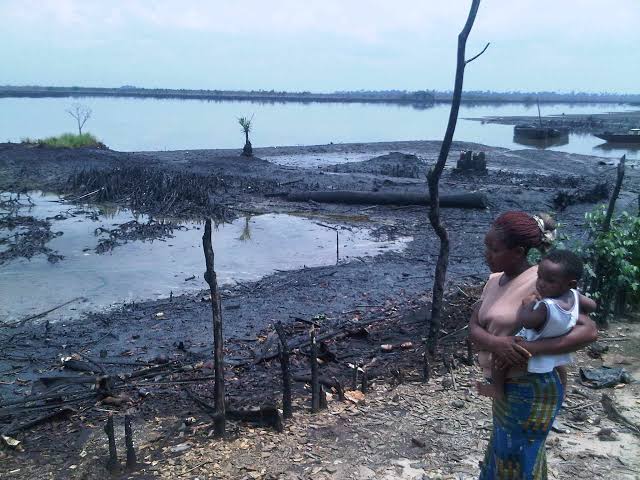
    The result is that the Niger Delta that hosts over 800 oil field communities with over 900 active oil wells and thousands of other oil exploitation infrastructures continues to suffer neglect. 13,329 settlements in the region, out of which, only 98 are rated as urban, with the rest as scattered rural villages, are mostly cut off from basic amenities. 88% of rural dwellers in the region are considered to be living in abject poverty.

    According to a research conducted by We The People, a civil society organisation, NDDC projects where they are located are known as disposable projects, meaning that the instant the projects are commissioned, the next few weeks they go into dysfunction and are abandoned. With the research, it is now known that the NDDC has up to 10,000 abandoned projects littering the landscape of the region. The region is left to rot from the impact of oil exploration and exploitation, with the people of the region left for dead. There is practically nothing to show for the amount of wealth being generated from the region.

    The forensic audit of the NDDC ordered by President Muhammadu Buhari and the investigation into the atrocities of the Commission started by the National Assembly (NASS) gave a glimmer of hope that the benefits transfer mechanisms for the region would finally be rejigged, fine-tuned so that development in real terms can start happening in the Niger Delta. But Nigerians were dead shocked by the way and manner the NASS made a mess of the investigation, to make matters worse.

    The drama shown at the NASS is an indication that the neglect of the Niger Delta is deep-rooted and that it is being orchestrated by players in the government in connivance with Niger Delta elements who are unperturbed by the dire future of the region when oil and gas exploration and production would have become a thing of the past.

    In the 60 years of oil and gas exploration and exploitation in Nigeria, there is nothing to write home about for all the revenues received. What then does the next 60 years hold? The time to take action is now if not, a gloomy future awaits the people of the Niger Delta who will live with the rottenness that oil exploration and exploitation is leaving behind.

    Meanwhile, in efforts to synthesize key recommendations necessary for policy action in the Nigerian oil and gas industry, the Nigeria Natural Resource Charter (NNRC) had made key recommendations needed to revolutionize the fortune of the Niger Delta. Major issues relating to managing local impacts of oil and gas activities are usually captured by NNRC in precept 5 of its benchmarking exercise report (BER).

    The precept directs that the government must pursue opportunities for local benefits and account for, mitigate, and offset the environmental and social costs of resource extraction projects if benefits from extractive activities are to be impactful to the people.

    But, it is unfortunate that since the charter was instituted, Nigeria has consistently performed below average in managing local impacts of resource extraction. The 2019 BER showed no noteworthy changes have occurred since the 2017 BER. Key legislation to ensure the participation of communities, protect the environment, mitigate costs, respect rights and ensure that communities benefit from oil and gas projects suffered setbacks in the period.

    This is more so even as the government has failed to pass key legislation as the petroleum industry bill (PIB) that has been touted as the salvation for the Nigerian oil and gas industry. The PIB has defied passage and assent for almost two decades. President Buhari, who happens to be the substantive minister of petroleum and, therefore, should know better, had declined assent to a component of the bill that has spent 19 years in circulation in Nigeria. He had promised that the executive would send a better version of the bill to NASS. Till date, its audio.

    It seems that the leadership of the nation is oblivious of the rapidly evolving nature of the dynamics in the global oil and gas industry and how volatile the industry is. It also seems that the leaders are oblivious of how developed countries have completely revolutionized their oil and gas industry with proper policy frameworks like the PIB. Nigeria deserves better because the nation’s oil and gas have to be managed efficiently for the good of all, especially as the PIB as proposed would see international oil companies (IOC) pay 10% of their net profit to petroleum host communities to benefit oil and gas producing areas to help cushion the suffering of so many years.

    Needless to say the outbreak of the Coronavirus disease (COVID-19) pandemic showcased in full scale the volatile nature of the oil and gas industry. The drastic fall in the price of crude, as a result, meant that the government had to prioritize expenditures. Hitherto, certain issues, including issues that have to do with the Niger Delta, were not prioritized. This portends a bad omen for the future of the Niger Delta when oil has lost its value as coal and stones did before it.

    It is, therefore, imperative that the government understand the urgency to address the issues bothering on the Niger Delta while the revenues from oil and gas continue to flow as there is a chance, as witnessed already, that when oil dries out, Nigeria will move on, while the Niger Delta region retains the negative externalities as the dire future begins and lasts forever.

    Given the urgency, the executive should, therefore, immediately send the PIB to the NASS because clarity on issues bothering on the petroleum industry is needed now more than before. The executive must also ensure that the forensic audit of the NDDC is not made a mess of like the NASS did. The tardiness in the management of scarce resources as the one witnessed with the NDDC must be avoided. In addition, the government should extend the forensic audit to other beneficiation institutions with the aim to ensure a total cleansing of the entire mechanisms of resource governance.

    And then, the NASS should wake up to its responsibilities of checks and balances to see that the government agencies are living up to expectations. The NASS must in addition to this and as a matter of urgency pass the much-awaited PIB immediately the bill is received from the executive. The benefits of the bill to Nigeria and indeed the Niger Delta cannot be overemphasized.

    Also, the NOSDRA bill, mentioned earlier, should be revisited. The environmental impact assessments, considered for expansion by the 8th Assembly, to include human rights, social components and conflict assessments, should also be considered, and be required and conducted for resource projects, going forward.

    Every means to change the fortune of the Niger Delta for good should be exploited as the region cannot afford to be in rot long after oil is a thing of the past. The time to act is now.

  • Don’t do anything to truncate ‘fragile peace’ in Niger Delta, Clark warns FG

    Don’t do anything to truncate ‘fragile peace’ in Niger Delta, Clark warns FG

    Prominent South South leader, Chief Edwin Clark has warned the President Muhammadu Buhari led federal government to thread softly and restrain from doing anything that can truncate the ‘fragile peace’ enjoyed in the Niger Delta region at the moment.

    Clark issued the warning on Monday in statement after at an Emergency Press Briefing held via zoom.

    Read full statement below:

    CHIEF (DR.) EDWIN CLARK, AGAIN, CAUTIONS THE FEDERAL GOVERNMENT TO TREAD CAUTIOUSLY ON THE AFFAIRS OF THE NIGER DELTA REGION, NOT TO SCRAP THE PRESIDENTIAL AMNESTY PROGRAMME (PAP)
    Just about 11 (eleven) days ago, I held a Press Briefing advising and cautioning the Vice President, His Excellency, Prof. Yemi Osinbajo, SAN, to tread cautiously on Niger Delta Affairs, I have cause to, again, advice/warn the Federal Government, to desist from anything that will truncate the fragile peace that we have in the Niger Delta region. I say this because, just yesterday, rumours were rife, that the 4-man investigative panel headed by Amb. A. A. Lawal, set up by the Federal Government, through the Office of the National Security Adviser, Maj. Gen. Babagana Mohammed Monguno (rtd), to look into the activities of the Presidential Amnesty Programme (PAP), has recommended the scrapping of the Programme by December this year, 2020. If this is true, it will be an epic example of what we say in local parlance ‘trouble dey sleep, yanga go wake am’. This is not a threat; it is stating the obvious of what will actually happen.

    When I got this information yesterday, my temper was high because how can a region which contributes so much to the economic growth, and by extension, political and social growth of the country be treated with so much disdain and spite.

    I recall the sacrifices some of us made before a compromise of setting up the Presidential Amnesty Programme was arrived at.

    As at the time when former President Olusegun Obasanjo, handed over to the late Presidnt Umaru Musa Yar’Adua, there were too many issues bothering on the neglect and deprivation of the coastal Niger Delta region.

    As leaders, we tried several ways to resolve these issues. We were able to reach a compromise with former President Obasanjo and that gave rise to the setting up of the Niger Delta Development Commission (NDDC) in 1999. But this did not solve the perennial problems of neglect in the region. So our children, understandably, decided to take their fate into their own hands. They took over oil platforms, insisting that oil production should be stopped if the aftermath of the activities in the region cannot be addressed. This matter escalated.

    I again recall that on a particular day in 2009, during the tenure of late President Yar’Ardua, with Dr. Goodluck Jonathan, as his Vice, I was invited to go to Oporoza Town, the headquarters of Gbaramatu Kingdom, as Father of the Day, to mark their annual festival. But I could not go personally, so I sent someone to represent me. By midday, I got a phone call from my representative that the festival could not hold because the Nigerian military has invaded the Kingdom; he said that as matter of fact, he was talking to me from the mangrove swamps, where they had gone into hiding, because the attacks were coming from all fronts, the Navy attacking from the sea, the Air Force was bombarding from the air, and the Army was attacking from the land; there was so much casualty, the communities that make up the Kingdom, Oporoza, Okerenkoko, Kurutie, had been destroyed.
    On getting that information, I made frantic efforts to reach the authorities concerned, from the President to the Secretary to the Government of the Federation (SGF), Mahmud Yayale Ahmed, to the Minister of Defence, General Godwin Abbe (rtd), all to no avail. The next thing I woke with two Medical Doctors standing over me, when I asked what had happened, I was told I had passed out and my blood pressure had risen to 180/100, so they had to call in the Doctors. Having regained consciousness, I called the then Vice President, Dr. Goodluck Jonathan who was away in Sweden on official duties to please return home, that his home was burning. He listened to my plea and returned the next day.

    The Federal Government started holding meetings with us, with Mr. President and Mr. Vice President actively involved in the meetings. It was during these meetings, that it was resolved, and the Federal Government decided to set up a Presidential Amnesty Programme to deal wisely with the matter, asking that the youths, our children, who have taken up arms, to fight for their ‘emancipation’, should drop their arms and they will be granted amnesty, a programme under which they will be trained both in formal and informal education, and stipends given to them while the programmes are going on.

    It took several efforts on our part as leaders and elders of the region to convince these children, and with apprehension too on our part, because we were not sure of our safety as the youths were prepared for the worst, therefore anything could happen.

    We sent several Ijaw personalities including Amb. Godknows Igali, who was then the Secretary to Bayelsa State Government, former retired high ranking military officers from the region like, Brig. Gen. Stanley Diriyai (rtd), Gen. Aper (rtd), Gen. John Yeri (rtd), and other prominent Ijaw men. These illustrious sons took the risk of going into the creeks pleading with the youths to lay down their arms and embrace the amnesty programme. As God would have it, most of them embraced the programme. But Henry Orkar, and Government Ekpemupolo, alias Tompolo, initially refused to embrace the programme because they doubted the sincerity of the Government, especially Tompolo, who felt so aggrieved, as someone from Gbaramatu Kingdom, whose kith and kin and Kingdom were needlessly attacked and almost decimated, and he was declared wanted after the “war”.
    Of course, the Federal Government gave an expiration date for people to embrace the amnesty, which was 4th October, 2009. Thus, Gen. Godwin Abbe and some military officers, accompanied by late Chief Tony Annenih, the leader of the Peoples’ Democratic Party (PDP), had to travel again to Oporoza, to further persuade Tompolo, to accept the programme. Luckily, Tompolo was persuaded. He was flown to Abuja, and his first point of call was to visit me at my resident in Abuja, along T. Y. Danjuma Street, Asokoro. Thereafter, our late President Yar’Adua, granted the Amnesty Programme by Proclamation.

    A Secretariat was opened at Abuja for the Programme and Maj. Gen. Abbe was appointed its first Co-ordinator; Timi Alaibe took over from him, and Kingsley Kuku, later took over from Timi Alaibe. This, in a nutshell, is the story of the Presidential Amnesty Programme which commenced on or about 11th July, 2009.
    When Mohammadu Buhari was elected President, because of media trials and persecutions of our people, Kingsley Kuku had to travel out of the country on medical grounds. For a long time, the PAP office was not functioning properly. Various students on the scholarship of the programme at home and abroad, were stranded, because their remittances were stopped, so they started agitating. I had to petition President Buhari to appoint someone to head the office. Maj. Gen. Paul Boro (rtd) was appointed to head the place. He was later removed due to allegations of corruption and maladministration. Then Prof. Charles Quaker Dokubo of the Institute of International Affairs was appointed to replace. Maj. Gen. Paul Boro, rtd. He too was removed or suspended allegedly for same reasons as Maj. Gen. Boro rtd. All these were done without any reference to or input from the leaders of the area.

    Infact it is alleged that during the time of Prof. Dokubo, people from other regions feasted on the office. He appointed someone from Kogi State in the name of a Consultant, whom it is alleged he is in league with, to employ some unqualified staff. Sons and daughters of the Niger Delta region were sacked or removed from office particularly the graduates of the Programmes, most of who graduated with First Class and Second Class Upper from their various Universities. We protested this unjust treatment to the Federal Government, and the reaction was a communication to us through the then Minister of Budget and Planning, Barrister Udo Udoma.

    Most of these youths are roaming the Streets today, unemployed. This matter will be a subject of discussion on another day. The PAP Office is now filled up with non-Niger Deltans.
    It was said that Prof. Dokubo awarded a freight contract to this Consultant to carry equipment from the Kaiama Skill Acquisition Centre at the sum of ₦1.8 billion, to some locations. It was further alleged that in order not to default the Procurement Act of the Government, Prof. Dokubo had to split the payment of the amount to 25 Companies. When the invoice was presented for payment, the Financial Controller refused to act on it because it was at variance with the Procurement Act. This resulted into disagreements, and the fallout is several petitions which were written by various persons accusing and counter accusing officials of the PAP.

    The Federal Government, like I said earlier, through the Office of the National Security adviser, Maj. Gen. Babagana Monguno, rtd, set up a 4-man Investigative Panel headed by Amb. A. A. Lawal, from Bauchi State and other three northners as members, on 28th February, 2020, and the job of this Panel, which all through its sitting, I understand, sat in the Office of the NSA, which was to end on 24th April, 2020, has lingered until today, they have, uptill this moment, taken over the administration of the PAP, operating from the NSA’s Office. Now we are getting information, that this ‘Investigative Panel’ is recommending the scrapping of the PAP by December this year, 2020.

    The question is, did Amb. Lawal and his team ever travel to the Niger Delta region to find out if the objective of setting up the Programme such as infrastructural development of sand filling; building low cost houses, building roads, etc, which are to be carried out by the PAP as its Second Phase activities contained in the Proclamation, been achieved? As someone outside of the region does he really understand or feel the sufferings of the people of the region? Also, what measures have been put in place by the Federal Government to fulfill its promises to the region such as setting up modular refineries, the relocation of the operational headquarters of the International Oil Companies (IOCs) and the Ogoni Clean-Up as contained in the 16-Point Agenda of the Pan Niger Delta Forum (PANDEF) which we presented to Mr. President at the Presidential Villa on 1st November, 2017?

    Our living condition in the region has worsened. The PAP should be allowed to continue for some more time.
    Once again, I wish to advise the Federal Government to tread cautiously, except they have prepared another ‘Operation Crocodile Smile’. Wake not a sleeping lion. This is not a threat; it is a clarion call for peace.
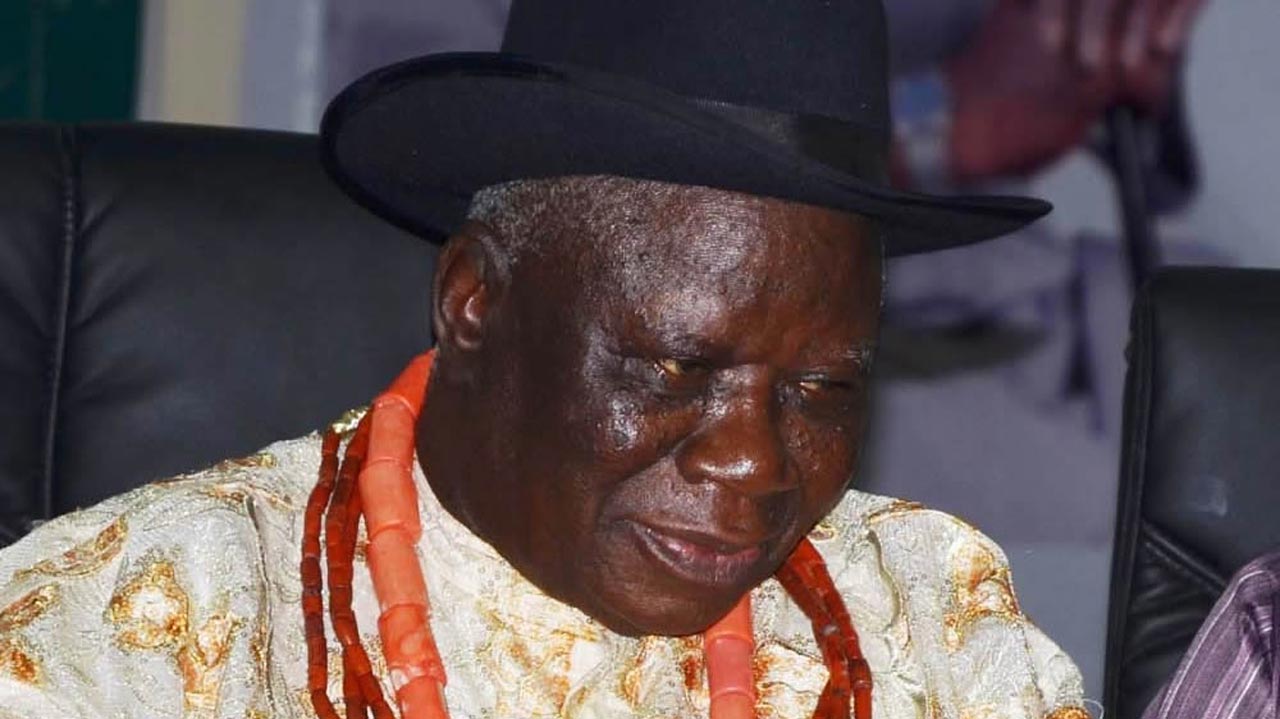
  • Allegation of abandoned projects: Edwin Clark takes  action against sponsors of false media reports

    Allegation of abandoned projects: Edwin Clark takes action against sponsors of false media reports

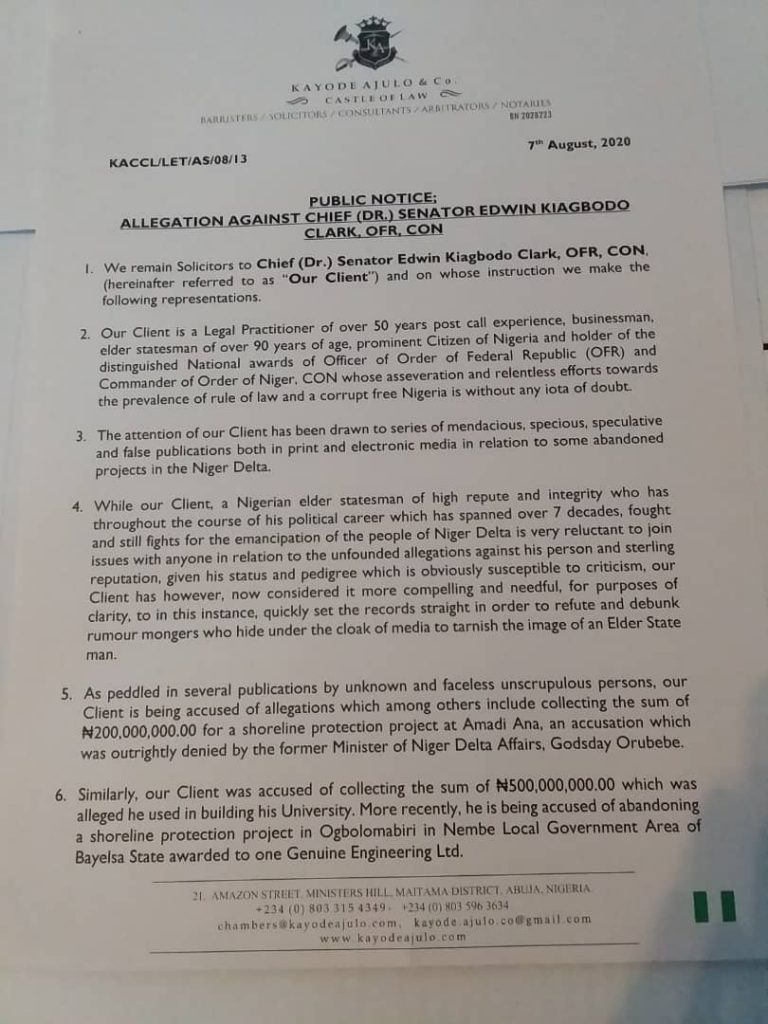
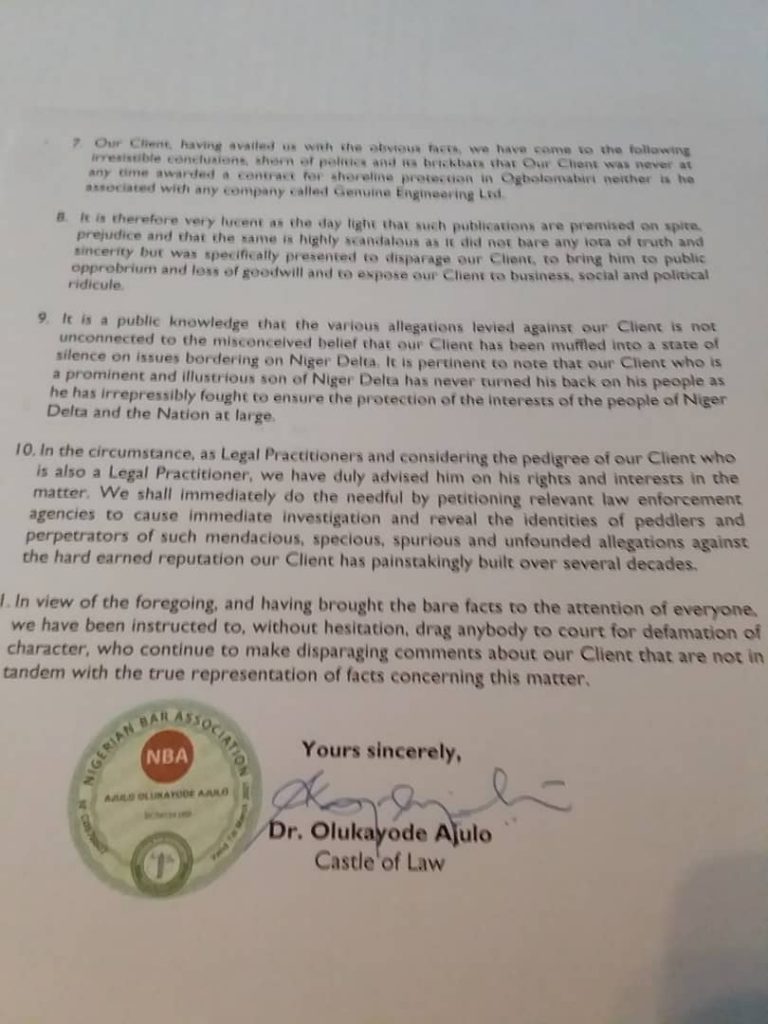
    Elder statesman and prominent Niger Delta leader, Chief Edwin Clark has instructed his solicitors, Kayode Ajulo & Co Castle of Law to commence legal proceedings against anyone identified as sponsors of false allegations against him in some sections of the media [TheNewsGuru.com, TNG not included] as regards abandoned projects in the Niger Delta.

    TheNewsGuru.com, TNG reports that the elder statesman’s company, Panama Construction Company had earlier denied reports of abandoning a project awarded to it by the Niger Delta Ministry in Rivers since 2011 after allegedly receiving downward payments.

    The solicitors in a detailed response to various allegations against their client (Clark) said all the allegations after thorough investigations by appropriate agencies were found to be baseless, misleading and sponsored.

    They however expressed their readiness to henceforth institute legal proceedings against anyone identified as sponsors of these false and politically motivated media attacks on the Niger Delta leader.

    Read full statement below: