Tag: Nigeria

  • World Bank raises alarm over soaring rural poverty in Nigeria

    World Bank raises alarm over soaring rural poverty in Nigeria

    The World Bank has expressed serious concern over the worsening poverty crisis in Nigeria, revealing that approximately 75.5% of rural Nigerians now live below the poverty line. This is according to the institution’s April 2025 Poverty and Equity Brief for Nigeria.

    The report highlights growing economic disparity, with rural areas bearing the brunt due to inflation, insecurity, and stagnating local economies. While 41.3% of urban residents are classified as poor, poverty levels are significantly more severe in the countryside.

    Using data from Nigeria’s National Bureau of Statistics (NBS), the Bank stated that as of 2018/19, 30.9% of Nigerians lived on less than $2.15 a day. Northern regions recorded poverty rates as high as 46.5%, compared to 13.5% in the South, further underscoring deep regional inequality.

    The World Bank also cited that children aged 0–14 face a 72.5% poverty rate, and poverty levels correlate strongly with education. For instance, individuals with no formal education suffer an almost 80% poverty rate, while those with tertiary education fare far better at 25.4%.

    Access to basic amenities remains limited. Nearly 40% of Nigerians lack electricity, 45% lack basic sanitation, and over 32% have no access to clean water. Education access is also limited, with 17.6% of adults not completing primary school and 9% of households having out-of-school children.

    The Bank warned that the country’s economic growth has failed to keep pace with population increases. Despite recent reforms, high inflation continues to erode incomes, particularly in urban areas where job creation remains sluggish.

    In response, the World Bank called for urgent reforms to shield vulnerable groups from inflation, stimulate employment through productive investments, and address systemic barriers like weak institutions and policy inconsistencies.

    Meanwhile, African Development Bank (AfDB) President Akinwumi Adesina criticized Nigeria’s economic stagnation, saying Nigerians are worse off today than they were at independence in 1960. He cited declining per capita income and compared Nigeria’s economic trajectory unfavorably with that of South Korea.

    However, the Nigerian Presidency rejected Adesina’s remarks, with presidential spokesperson Bayo Onanuga disputing his figures and accusing him of political bias. Onanuga argued that GDP per capita does not fully reflect improvements in infrastructure, access to technology, healthcare, and education since independence.

    Civil society leaders also weighed in. ActionAid Nigeria blamed persistent poverty on government corruption and poor policy decisions, especially recent economic reforms that worsened conditions for many Nigerians. Economist Garba Sheka echoed the World Bank’s concerns, warning that rising poverty could undermine national stability if not urgently addressed.

  • Meta warns it may shut down Facebook, Instagram in Nigeria [SEE REASONS]

    Meta warns it may shut down Facebook, Instagram in Nigeria [SEE REASONS]

    Nigerians could lose access to Facebook and Instagram as Meta, the platforms’ parent company, has threatened to suspend its services in the country due to what it describes as excessive fines and “unrealistic” regulatory demands from Nigerian authorities.

    The tech giant is facing fines totaling over $290 million imposed by three Nigerian regulatory bodies last year, citing breaches of competition, advertising, and data protection laws. Meta recently lost its bid to overturn these penalties in the Federal High Court in Abuja.

    In court filings, Meta stated it may be “forced to effectively shut down” Facebook and Instagram in Nigeria to avoid the consequences of enforcement actions. WhatsApp, another Meta-owned platform, was not mentioned in the statement.

    The Federal High Court has given Meta until the end of June to settle the fines. The BBC reached out to the company for comment but has yet to receive a response.

    Facebook remains the most widely used social media platform in Nigeria, crucial not only for everyday communication but also for thousands of small businesses that rely on it for marketing and operations.

    The penalties include a $220 million fine from the Federal Competition and Consumer Protection Commission (FCCPC) for alleged anti-competitive behavior, $37.5 million from the advertising regulator for unauthorized ads, and $32.8 million from the Nigeria Data Protection Commission (NDPC) for data privacy violations.

    FCCPC chief Adamu Abdullahi claimed that investigations conducted with the NDPC between May 2021 and December 2023 uncovered invasive practices affecting Nigerian users, although specifics were not disclosed.

    Meta’s main dispute lies with the NDPC, which it accused of misinterpreting data privacy laws. The commission has demanded prior approval for transferring user data outside Nigeria—something Meta calls “unrealistic.” Other requirements include prominently displaying educational content about data privacy risks, co-produced with government-approved institutions and nonprofits.

    Meta criticized the NDPC’s approach, calling its expectations “unfeasible” and arguing that the commission had failed to accurately interpret the country’s data protection laws.

    (BBC)


  • Vietnamese poisoned over 50 years, as Mexico, Nigeria seek joint survival – By Owei Lakemfa

    Vietnamese poisoned over 50 years, as Mexico, Nigeria seek joint survival – By Owei Lakemfa

    Can you imagine being born 50 years ago with poison in your system; assured that the only remedy is death? That was the fate of about three million Vietnamese who were sprayed herbicides called Agent Orange, specially manufactured by the United States, US, to ensure the victims were not only exterminated but also that their offspring would continue to die for decades.

    The American plan followed the same logic of deliberately spraying a farm with toxic herbicide to control or kill weeds. The Americans were conscious of the long-term effects of spraying the chemical on human beings.

    Wednesday, April 30, 2025, as the fiftieth commemoration of the end of the US war on the Vietnamese was being commemorated, millions of Vietnamese people are still suffering or dying from the effects of the 11.22 million gallons of the Agent Orange chemical sprayed on them across 20 million acres, from August 1965 to 1971. The victims and their offspring as a result, suffer, amongst other things, from miscarriages, severe birth defects, B-cell leukemia, bladder cancer, lung cancer, Type-2 diabetes and Parkinson disease.

    The unintended victims included the invading US troops as 300,000 US veterans also died from exposure to Agent Orange.

    The US Cleveland Clinic established in 1921, explains why the chemical was so devastating: “Agent Orange contains a chemical called dioxin. Dioxin is a compound made from burning chlorine with carbon and hydrogen. The molecules of these chemicals are toxic to plants, animals and humans. When dioxin enters your body, it can damage or destroy vital organs, cells, your immune system and your hormones. Dioxin is a carcinogen, which means it can cause cancer. Agent Orange was extremely deadly because the US sprayed 20 times more than the manufacturer recommended in the environment.”

    Despite being subjected to such agony with effects as devastating as the US atomic bombings of Hiroshima and Nagasaki, the Vietnamese refused to surrender, until they achieved victory over the Americans. To them: “Nothing is more precious than independence and freedom.”

    The victory came after 30 years of resistance from 1945: first against inhuman French colonialism, then criminal American imperialism. In the war against France, over 200,000 Vietnamese lost their lives, while France and its European and American allies lost over 70,000 soldiers with 65,000 injured and 40,000 taken prisoner. In the one against the US in which the Americans also used other chemicals, including Agent White, Agent Blue, Agent Purple, Agent Pink and Agent Green, about two million Vietnamese were killed while US lost 58,202 soldiers with 75,000 severely disabled.

    On the significance of the Vietnamese victory half a century ago, the General Secretary of the Communist Party of Vietnam, To Lam wrote this week that:  “It left a powerful mark on the international stage, giving strong momentum to national liberation movements across Asia, Africa and Latin America. It encouraged nations to rise up against neo-colonialism and reclaim their right to freedom and independence. It was a triumph of justice over tyranny, an affirmation to the international community that even a small nation, armed with a just cause, unity, and unyielding will, and with the wholehearted support of international friends, progressive forces, and peace-loving people around the world, can defeat powers many times stronger.”

    As for the future, Lam said: “We cannot rewrite history, but we can shape up our future. The past is to remember, to be grateful for, and to learn lessons from. The future is for building, creating, and developing together. That is the honourable promise of today’s generation to those who laid down their lives, as well as the common aspiration of a nation that has endured great suffering, yet has never been defeated.”

    Just as Vietnam is looking forward to the future, so are Mexico and Nigeria who are unsure how the Trump administration might impact on them. This is more so in an era of unreasonable tariffs.

    Therefore, on April 29, 2025 in Abuja, they inaugurated and commissioned the Nigeria-Mexico Chamber of Commerce, hoping to build on the modest beginnings already achieved. The Chambers says, for instance, the dried hibiscus flowers from Nigeria, locally called Zobo, “has successfully entered the Mexican market—generating over $3 billion in annual sales.”

    It is a crop that grows widely in Northern Nigeria and the health benefits from the drink include reduced blood pressure, cells protection against damage (antioxidants) and improved heart health.

    The President of the new Chamber, Ms Arim Topete, grew up in Mexico and has lived and worked in the Nigerian pharmaceutical industry in the last 15 years. She posited that: “Mexico is an industrial and manufacturing powerhouse with the capacity to support Nigeria’s infrastructure development and growing consumer market.” Topete said, simultaneously: “Nigeria’s vast agricultural and natural resources could provide essential inputs for Mexico’s industries.”

    In situating the growing Nigeria-Mexico co-operation within the socio-economic global politics, Topete said: “This Chamber is more than a business platform; it is part of a growing global movement showing that countries in the Global South are ready to lead, work together and shape trade and business opportunities in our own terms. For too long, our regions have engaged with each other primarily through third parties or out-dated paradigms. We are now entering a new era—one where cooperation between us is direct, equal, and driven by our shared goals.”

    Nigeria’s Minister of Livestock Development, Idi Mukthar Maiha, held that Nigeria with its huge livestock has a lot to learn from Mexico. He said although the civil war in Sudan is unfortunate, it has left a huge gap in livestock supply which Nigeria can fill. He said Nigeria itself is a huge market, remarking that if 47 million school children are provided milk, that is already a big market.

    Foreign Minister Yusuf Maitama Tuggar, who spoke through Ambassador Anderson Madubuike, said Nigeria needs to build its local resources and, on the basis of this, reach out to other economies, adding that: “You must use two hands to wash your hands.”

    Mexican Ambassador Alfredo Miranda provided statistics on what Mexico has to offer Nigeria. This includes its being the 12th largest economy in the world, with a Gross Domestic Product of $1.8 trillion. A significant reduction of government borrowing needs from 1.99 trillion Mexican pesos to 1.43 trillion Mexican pesos. An inflation under control and forecast decline to 3.8 per cent by 2025. A global export leader with over $1 trillion with 83 per cent of exports to the US being non-oil and automotive products alone accounting for over 35 per cent of manufacturing exports.

    He lamented that trade between Nigeria and Mexico is paltry, hence the need for the Chambers which can move their joint trade up from the paper weight category.
  • UN, EU  convene strategic meeting to support Nigeria

    UN, EU convene strategic meeting to support Nigeria


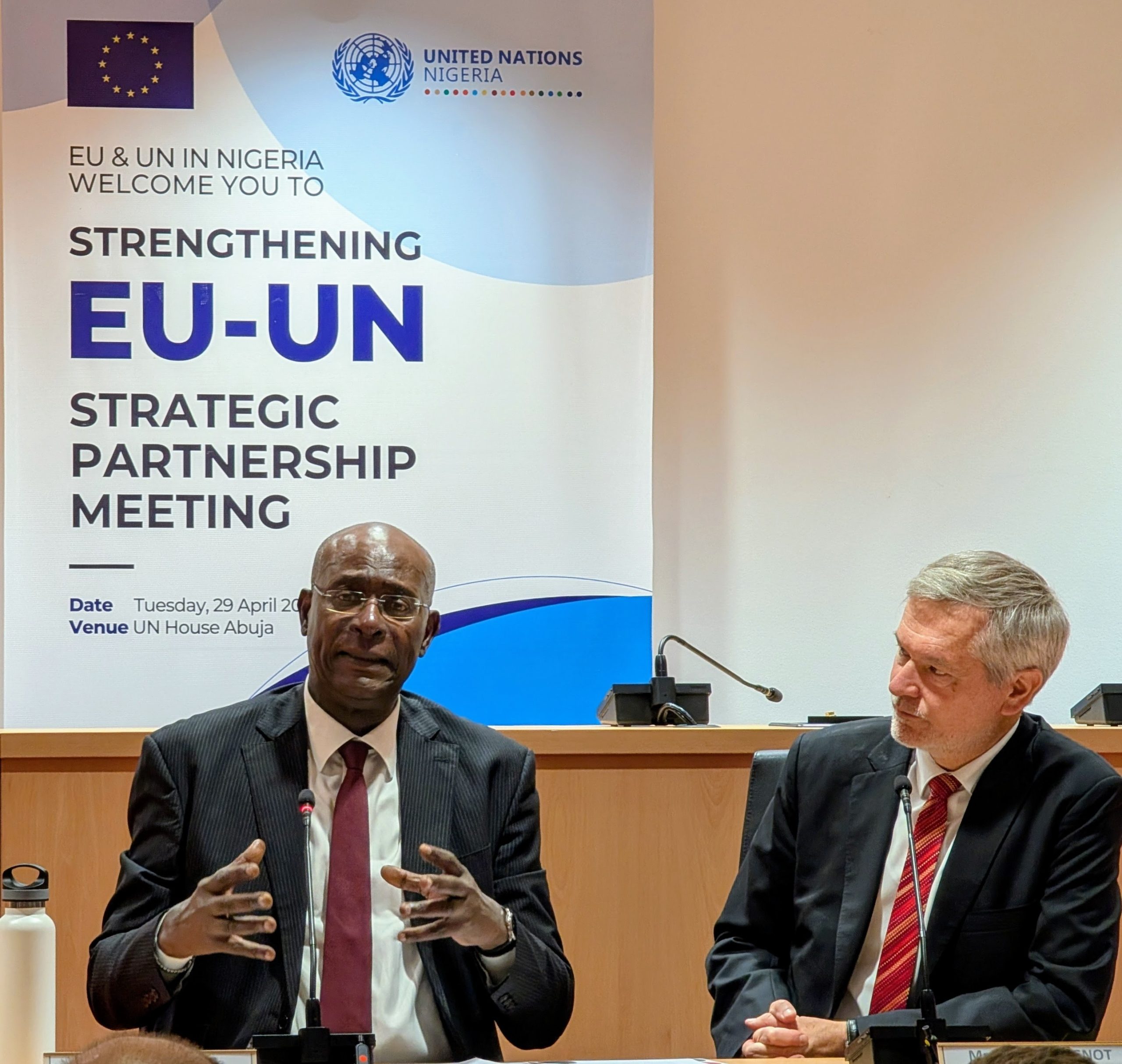
    Building on the global partnership approach between the United Nations and the European Union, the UN and the EU in Nigeria have convened a strategic partnership meeting to strengthen collaboration and improve efficiency and coordination in delivering on shared priorities in support of Nigeria.

    Convened by the Head of the European Union Delegation to Nigeria and to the Economic Community of West African States (ECOWAS), Ambassador Gautier Mignot, and the UN Resident and Humanitarian Coordinator in Nigeria, Mohamed Malick Fall, the meeting was attended by Ambassadors of the EU Member States in Nigeria and Heads of UN Agencies in the country.“In a fast-evolving world, where multilateralism is challenged, the EU-UN partnership is more relevant than ever. For Nigeria and many other countries in the world, this partnership is a strong and reliable source of financial and technical support, respectful of national sovereignty and oriented towards the achievement of the sustainable development goals.” Ambassador Mignot said.He assured that “Together with its Member States, as “Team Europe”, and in particular through the Global Gateway strategy, the EU Delegation in Nigeria will continue to work hand in hand with UN agencies to help create socio-economic opportunities, especially for the most vulnerable.”The UN Resident and Humanitarian Coordinator in Nigeria, Mohamed Malick Fall, noted that advancing the Sustainable Development Goals (SDGs) required robust partnerships and strong institutions. “In this context, the strategic UN-EU partnership—both globally and in-country—has become even more vital for delivering on our shared priorities. As both institutions undergo transformations—the EU through its Global Gateway Strategy and Team Europe initiative, and the UN Development System through enhanced efficiency, impact, and coherence—this meeting provides a timely opportunity to deepen our collaboration.” He said.Fall observed, “In this challenging funding and political environment, we believe there is an opportunity—a necessary wake-up call for multilateralism and international solidarity.”The Resident Coordinator, therefore, assured that the “UN is committed to working alongside the Nigerian government and the EU to manage this transition and deliver on the promise of the UN reform agenda.”

  • Nigeria to establish centralised system for verifying travel documents – Tunji-Ojo

    Nigeria to establish centralised system for verifying travel documents – Tunji-Ojo

    The Minister of Interior, Dr Olubunmi Tunji-Ojo, has announced plans to establish a centralised system for the authentication and verification of all travel documents in Nigeria.

    He made this known during a meeting in Abuja on Tuesday with the United Kingdom (UK’s) Minister of State, David Hanson.

    In the company of Hanson were delegates from the UK Home Office, National Crime Agency, and the British High Commission.

    According to Tunji-Ojo, the initiative aims to tackle immigration and document fraud, particularly those associated with border control.

    “We discovered that one of the key drivers of rising document fraud is the absence of a centralised, real-time verification system,” he said.

    “Currently, if someone submits 20 documents, you may need to contact 20 different issuing agencies to verify them. That breeds inefficiency.”

    He explained that the proposed system would allow real-time verification of all documents—such as bank statements, passports, and certificates—at a single center.

    The minister also said Nigeria was ready to take the lead in formulating a regional strategy for border control, noting that regional differences required customised approaches.

    “To tackle a heterogeneous problem with a homogeneous approach will not work,” Tunji-Ojo stated.

    “That’s why we’re planning a regional border conference to allow for the development of unified yet adaptable strategies to combat migration and border-related challenges.”

    He further disclosed that Nigeria’s EU visa solution platform would go live on May 1.

    According to him, this will allow for more efficient processing and international cooperation while safeguarding national security and promoting investment.

    “We now have a policy that ensures a response—approval or rejection—within 24 to 48 hours of applying for an EU visa,” he said.

    Speaking on President Bola Tinubu’s Renewed Hope agenda, Tunji-Ojo emphasised the administration’s commitment to preventing corruption rather than merely reacting to it.

    “Our performance will be judged not by the number of convictions or recoveries but by how many crimes or frauds we prevent,” he said.

    In his remarks, Hanson expressed the UK’s readiness to continue collaborating with Nigeria to improve criminal justice outcomes.

    Hanson noted that the UK was reviewing its e-visa system and migration policies while exploring ways to expand trade, business, and skills development opportunities with Nigeria.

    “My colleagues at the High Commission are eager to maintain strong engagement with the Nigerian government,” he said

    According to him, the UK looks forward to enhancing cooperation in tackling crime and fraud.

    “You can rest assured that the National Crime Agency, the High Commission, and the Home Office are ready to extend a hand of partnership,” he said.

  • Russia willing to share counter-terrorism strategies with Nigeria

    Russia willing to share counter-terrorism strategies with Nigeria

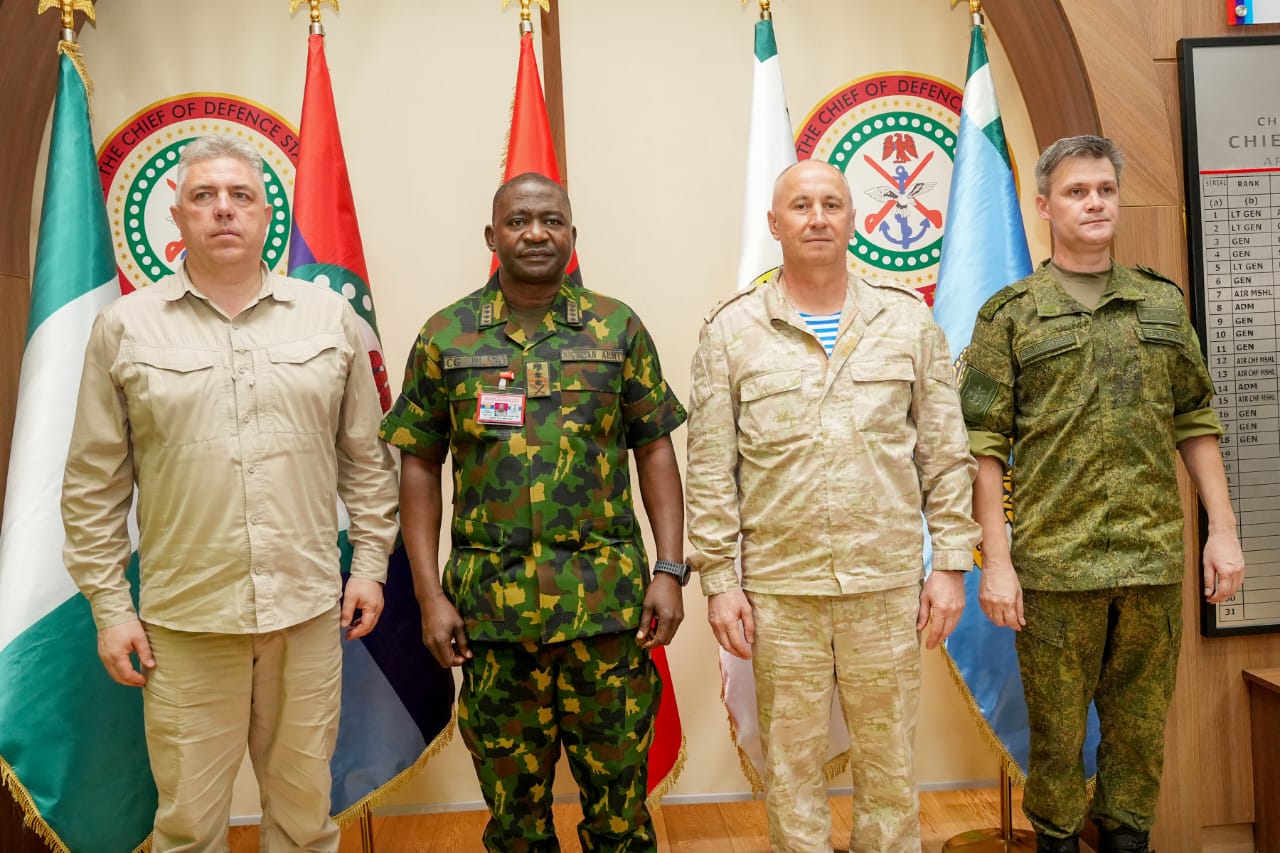
    The Russian Government has expressed its willingness to share with Nigeria the new strategies it has developed to support the country’s fight against terrorism.

    This is contained in a statement by the Director of Defence Information, Brig.-Gen. Tukur Gusau, on Monday in Abuja.

    He said Lt.-Gen. Andrei Averianov, Russian envoy, made the pledge on Monday, when he paid a courtesy visit to the Chief of Defence Staff (CDS), Gen. Christopher Musa in Abuja.

    Gusau said that Averianov said Russia was engaged in special operations in 39 countries, during which she developed new methods, and was willing to share them with Nigeria to support the fight against terrorism.

    He said it had been 80 years since Russia fought Nazism, adding that the security landscape had however, evolved, with asymmetric threats such as Al-Qaeda and Boko Haram now emerging.

    Gusau said the head of the Russian delegation expressed Russia’s delight for being part of the fight to create a more secure environment for future generations in Nigeria.

    He pledged Russia’s support to Nigeria in its fight against terrorism, while recognising Nigeria’s significance as a major stakeholder and power in the region.

    According to him, Russia has been observing and learning from Nigeria’s counterterrorism efforts over the years, Gusau attributed the envoy as saying.

    “As brothers in arms, we are ready to assist, particularly with the provision of the full range of weapons required by the Armed Forces of Nigeria (AFN) to prosecute its war on terror,” he said.

    Gusau said that responding, the CDS welcomed the delegation on behalf of President Bola Tinubu and the members of the Nigerian military.

    Musa said that both Russia and Nigeria were undergoing challenging times, resulting in the loss of personnel and necessitating the conduct of special operations.

    According to him, Musa thanked the delegation for the support from the Russian Federation.

    Musa, he said, noted that Russia and Nigeria had long enjoyed strong ties, emphasising the need for continued partnerships in the areas of training and operations.

    The CDS further emphasised the importance of exchanging instructors and students between the two countries for trainings.

    “For the Nigerian Army, Navy and Air Force, there is the need to expand training in Special Operations and provision of requisite equipment, special boats, fast attack craft and amphibious training.

    “Others include the need for assistance in the maintenance of Russian platforms and the provision of air surveillance, respectively,” he said.

    Gusau further quoted the defence chief as stressing that Nigeria had several Russian-made platforms that were currently unserviceable.

    He requested support through the provision of spare parts and the deployment of Russian experts for in-country maintenance or arrangements for backloading such equipment to Russia for repairs.

    Musa appealed for enhanced intelligence sharing from Russia to Nigeria, noting that the Russians had gained valuable experience and capacity from their extended operations, particularly in the Sahel region.

    He said that Musa also thanked the delegation for their gesture for personally delivering equipment and providing a team of experts to assist in their testing.

    The CDS added that the Russian Federation had fulfilled its commitment to Nigeria as promised,” Gusau said.

  • Flamingos play goalless draw with Algeria to qualify for World Cup

    Flamingos play goalless draw with Algeria to qualify for World Cup

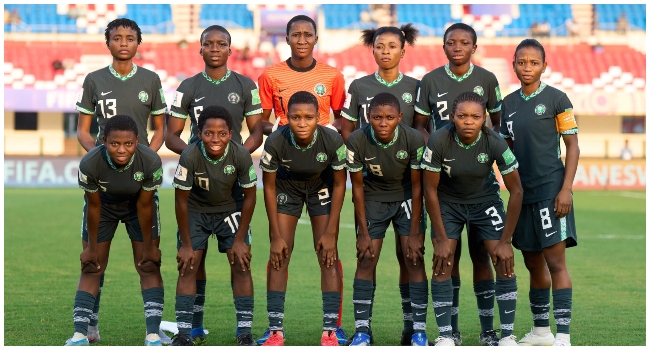
    Nigeria’s Under-17 female football team, Flamingos, on Friday played a goalless draw with Algeria to qualify for the 2025 FIFA U-17 Women’s World Cup in Morocco.

    The 2022 bronze medalist, who were determined to win their last match of the qualifying series, absorbed the pressure of the Algerian girls in the return leg played at Stade Mustapha Tchaker in Blida.

    NAN reports that the Flamingos battled for supremacy to be one of the countries to represent the continent in the World Cup in October

    In spite of the wintry conditions in Blida on the outskirts of the Algerian capital, Algiers, the Nigerian girls dug their feet into the ground and achieved a scoreless draw that qualified them for this year’s Women’s World Cup finals.

    Holding on to a 4-0 first-leg advantage, the 2002 bronze medalists adopted a calm and collected pattern that easily soaked up the pressure from the hosts.

    They then relied on fast breaks to try and pull the trigger on their opponents

    Although they created better chances, the Flamingos failed to take advantage of their dominance in possession.

    They, however, collected the ticket to Morocco on a 4-0 aggregate win.

    The difference over two legs of the final round was a remarkable display in the opening leg by the Flamingos.

    The Flamingos will now be one of Africa’s five representatives (including hosts Morocco) at this year’s FIFA U-17 Women’s World Cup finals taking place from Oct.17 to Nov 5.

    The final competition will feature 24 teams for the very first time.

    Since the FIFA U-17 Women’s World Cup competition was launched in New Zealand in 2008, Nigeria failed to make the finals only once.

    This was at the 2018 tournament hosted by Uruguay.

  • Nigeria, World Bank set job creation agenda

    Nigeria, World Bank set job creation agenda

    The Minister of Finance and Coordinating Minister of the Economy, Mr Wale Edun, says Nigeria is working with the World Bank to develop a job-creation agenda.

    Edun made this known during an interview with journalists after the World Bank Development Committee plenary held on Friday in Washington D.C.

    He said the meeting focused on creating jobs and ensuring that young people in Nigeria have a secure and promising future.

    According to him, the aim is to set a direction for the World Bank and its Governors to agree on a forward-looking development agenda.

    Edun explained that the role of multilateral development institutions is central to driving global development, particularly through collaboration with country governors.

    He emphasised the importance of the World Bank’s focus on job creation as a way of securing the future for young people globally.

    He added that Africa, with a projected 25 per cent of the world’s youth by 2050, was a key focus of the discussion.

    The minister noted that a stable macroeconomic environment and financial security are essential to support job creation in Nigeria.

    He stressed the need to attract private sector investment to generate quality, domestic jobs rather than relying on outsourced roles.

    Edun said the committee’s priorities align with President Bola Tinubu’s economic agenda, which aims to stabilise the economy and attract both local and foreign investors.

    He stated the plan includes raising productivity, growing the economy and especially creating employment opportunities for Nigeria’s youth.

    According to Edun, another goal is to prevent young people from leaving their countries in search of better-paying jobs abroad.

    “The objective is to create jobs locally, empower youth, and support this through essential infrastructure.

    “For young people, that includes digital infrastructure — access to data, internet, and fibre optic networks — to enable them to work remotely,” he added.

  • IMF urges Nigeria to be prudent in spending

    IMF urges Nigeria to be prudent in spending

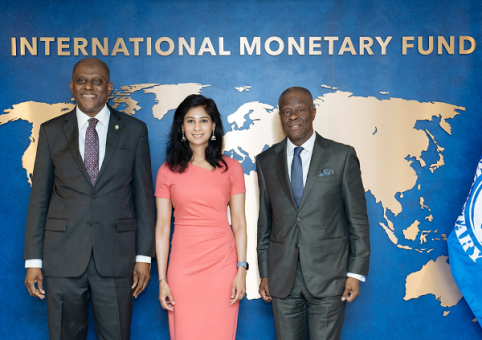
    The International Monetary Fund (IMF), has urged Nigeria to be prudent in spending following implementation of hard economic reforms that has made it to save more revenue.

    The Director, Fiscal Affairs Department IMF, Vitor Gaspar, said this at a Fiscal Monitor news conference at the ongoing 2025 IMF/World Bank Spring Meetings in Washington D.C. on Wednesday.

    He said that there was an urgent need for fiscal authorities and governments to build buffers.

    According to him, governments need to act urgently and decisively as they face harsh trade offs and painful choices.

    He said it was important for policy makers to invest their political capital in building confidence and trust that starts with keeping their own houses in order.

    ”This is especially important in a situation that tests the resilience of individual economies, not to mention the entire system.

    “Putting house in order involves three policy priorities. first, fiscal policy should be part of an overall policies.

    “Secondly, fiscal policy should in most countries, aim atreducing public debt and rebuilding buffers to create space to respond to spending pressures and other economic shocks through a credible medium term framework.

    “Thirdly, fiscal policy should together with other structural policies, aim at improving potential growth, thereby easing policy trade offs in these times of high uncertainty.

    “Fiscal policy must be an anchor for confidence and stability that contributes to a competitive economy, delivering growth and prosperity for all ministers of finance must build trust, tax fairly, spend wisely and take the long team,” the director said.

    The Nigerian Division Chief in the Fiscal Affairs Department of the IMF, Davide Furceri, said that Nigeria had been able to make some of those painful choices to have space for fiscal savings but it needs to spend wisely.

    “Nigeria managed to do a very difficult reform that was important in delivering fiscal savings.”

    Furceri said that the country need to focus on boosting revenue through improved mobilisation efforts, and secondly, scaling up spending in key areas like social protection and investment.

    “That said, we understand that many countries, including Nigeria, face pressing spending needs. But spending must be done wisely, this means stronger prioritisation and greater efficiency in how resources are allocated.

    “One key message not just for Nigeria, but for many countries, is the importance of strong fiscal institutions. Medium-term fiscal frameworks and solid public financial management systems.are essential.

    “They provide a fiscal anchor to guide necessary adjustments and help reduce uncertainty. We want fiscal policy to be a source of stability, not a source of volatility,” he said.

  • Nigeria urges IMF, World Bank to strengthen support for reform-oriented economies

    Nigeria urges IMF, World Bank to strengthen support for reform-oriented economies

    The Nigerian government has called on the International Monetary Fund (IMF) and the World Bank to provide stronger financial support for economies undertaking bold reforms, especially in Sub-Saharan Africa.

    The appeal was made by Nigeria’s Minister of Finance and Coordinating Minister of the Economy, Wale Edun, during the G-24 Ministerial Meeting held alongside the 2025 IMF/World Bank Spring Meetings in Washington, D.C.

    Edun emphasized the need for innovative financial instruments tailored to support reform-driven countries in their pursuit of economic transformation. Addressing global financial leaders and policy influencers, he urged the international community to go beyond simply recognizing reform efforts and instead offer affordable, sustainable financing to assist in long-term economic transitions.

    Speaking in his dual role as Nigeria’s representative and First Vice-Chair of the G-24—a coalition of developing nations coordinating policy positions on development and monetary issues—Edun highlighted the ambitious reforms being pursued under President Bola Ahmed Tinubu’s administration. These include the elimination of fuel subsidies, the unification of foreign exchange rates, and an ongoing tax system overhaul aimed at expanding the revenue base and boosting fiscal efficiency.

    “These are tough choices,” Edun admitted, “but they are essential for building a stronger, more inclusive economy that benefits all Nigerians.”

    He welcomed the IMF’s recent decision to create a third Sub-Saharan Africa Chair, recognizing it as a step toward amplifying the region’s voice within the institution. Edun encouraged continued progress through increased African representation in leadership and decision-making roles at the IMF and World Bank.

    “Nigeria is open for business,” he declared, reaffirming the country’s commitment to engaging with international development partners, investors, and multilateral institutions to advance its economic reform agenda.

    The G-24 Meeting serves as a crucial forum for finance ministers and central bank governors from developing nations to address shared challenges and craft policy solutions amid a global landscape marked by tight financial conditions, climate risks, and geopolitical tensions.

    Edun’s remarks reflect Nigeria’s ongoing commitment to leading multilateral development dialogue and aligning its domestic reforms with global best practices for economic stability, inclusive growth, and sustainable development.